Why should China change its successful trade policies just to please the US, given America’s own history of violations?
Dani Rodrik says when crafting a global trading environment, it’s important to realise that all nations have different political and social settings, and so will not play by the same ‘rules’
A high-profile United States trade delegation appears to have returned empty-handed from its mission in China. The result is hardly a surprise, given the scale and one-sided nature of the US demands. The Americans pushed for a wholesale remaking of China’s industrial policies and intellectual property rules, while asking Beijing to refrain from any action against US President Donald Trump’s proposed unilateral tariffs against Chinese exports.
This is not the first trade spat with China, and it will not be the last. The global trading order of the last generation – since the creation of the World Trade Organisation in 1995 – has been predicated on the assumption that regulatory regimes around the world would converge. China, in particular, would become more “Western” in the way that it manages its economy. Instead, the continued divergence of economic systems has been a fertile source of trade friction.
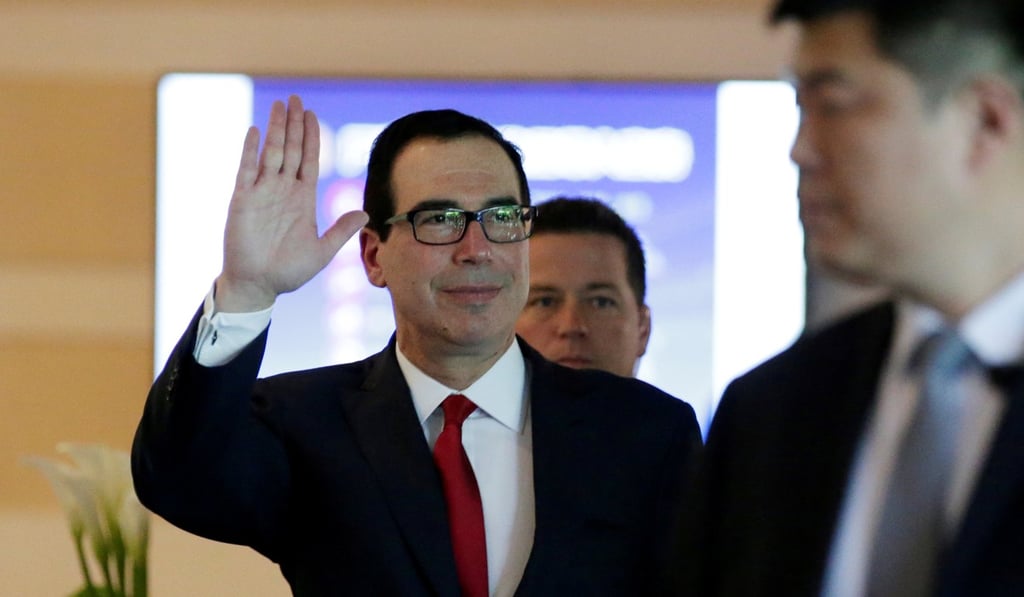
US Treasury Secretary Steven Mnuchin waves as he and members of the US trade delegation leave a hotel in Beijing, on May 3. Photo: Reuters
Advertisement
There are good reasons for China – and other economies – to resist the pressure to conform to a mould imposed on them by US export lobbies. After all, China’s phenomenal globalisation success is due as much to the regime’s unorthodox and creative industrial policies as it is to economic liberalisation.
Selective protection, credit subsidies, state-owned enterprises, domestic-content rules and technology-transfer requirements have all played a role in making China the manufacturing powerhouse that it is. China’s current strategy, the “Made in China 2025” initiative, aims to build on these achievements to catapult the country to advanced-economy status.
Advertisement
That many of China’s policies violate WTO rules is plain enough. But those who derisively call China a “trade cheat” should ponder whether China would have been able to diversify its economy and grow as rapidly if it had become a member of the WTO before 2001, or if it had slavishly applied WTO rules since then.