Advertisement
In the end, peace in Korea will rest on Koreans themselves – not the US or China
Tom Plate says whatever the success or failure of Chinese and US diplomacy, the North Korean nuclear crisis will end only when the Koreans themselves choose change, and build on Moon Jae-in’s vision and the North Korean people’s longing for better days
4-MIN READ4-MIN

To appreciate the sageuk drama unfolding on the Korean peninsula, understand that not just two Korean entities have starring roles in history’s cast, but three. The first is the Republic of Korea of the south – developmentally accomplished, politically volatile. The second is the Korea of the north – dead-pool polity, cultish culture.
But there is a third: the formal entity, the Democratic People’s Republic of Korea, UN member-state, diplomatic primate. For this Korea, negotiating a deal with the United States may prove impossible. But in developmentally stunted Korea Two – 25 million souls or so – many might now be sensing that going it alone for much longer is impossible, that it is time to “re-tribalise”, that the agony must be eased. Something has to give.
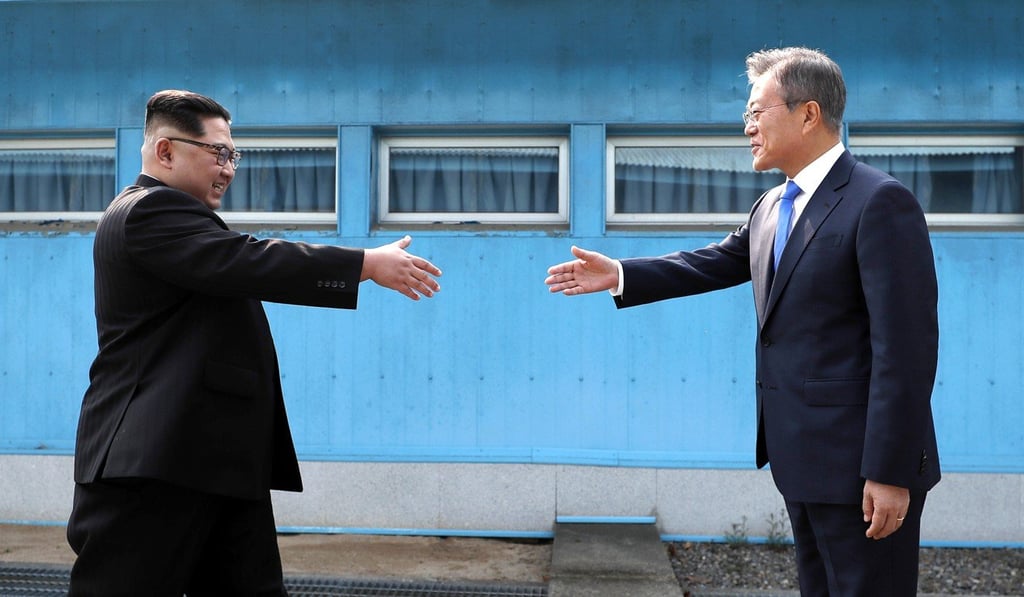
And something just might happen, in part due to the strategic vision and emotional largesse of Moon Jae-in, South Korea’s president, and his growing fan base. Yes, Korea One is not dramatically more unified politically than the Korean peninsula: it appears to be split between those who prefer to keep what they have, and those who are willing to share. So, yet again, the fate of the peninsula is linked to the political will and heart of outsiders.
Advertisement
Advertisement
In the end, they may not turn out to be of decisive help. Neighbouring Japan comes up problematic, with its history of occupation of Korea negating its potential contributions. Russia is never irrelevant, but Vladimir Putin, its president, is focused elsewhere, and will keep out of the path of China. From the US perspective, the unwavering belief is that big China can yank little Pyongyang around at will.
Advertisement
Select Voice
Select Speed
1.00x