Advertisement

Outside In | Vietnam, the unlikely poster child for a sustainable lifestyle
David Dodwell says although research links countries with high social progress to a resource-heavy lifestyle, there are exceptions. The urgent task before us is to redress the imbalance between what we want and what we can afford – by cutting down on waste for starters
Reading Time:4 minutes
Why you can trust SCMP

It seems we are making great progress in lifting people out of poverty, giving them better education and improved health care – but only by consuming resources at a rate that punishes the planet.
A fascinating piece of research by a team at Leeds University in Britain, examining the performance of around 150 countries worldwide in terms of their social progress, and the unsustainable damage they are inflicting on the environment, shows a dreadful link. We simply don’t seem to be able to improve people’s livelihoods without using more resources than the planet can afford.
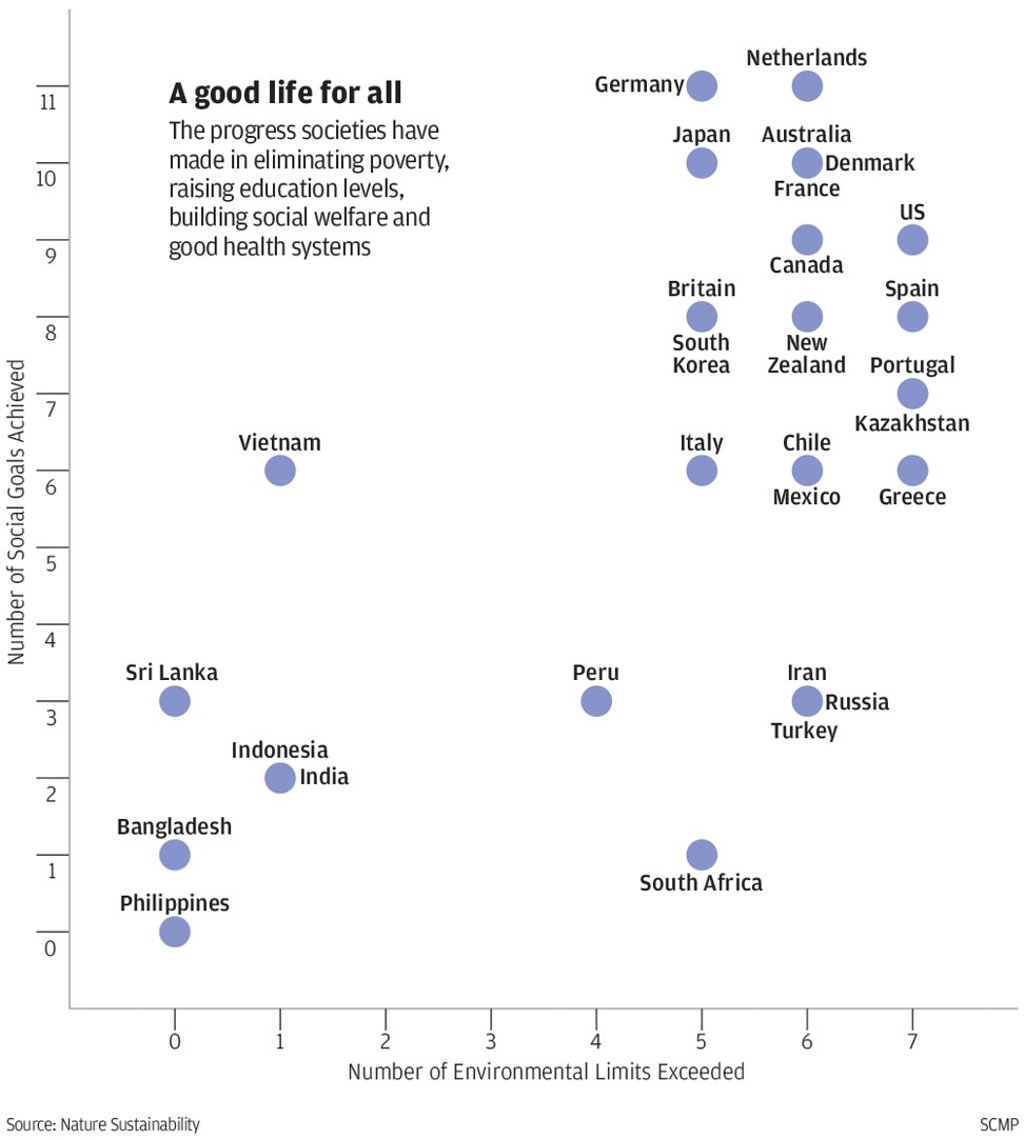
No one is doing well – except, improbably, Vietnam. Worst of all is the United States, which is one of five countries that are exceeding their “quota” of resource use or environmental harm by every one of the seven criteria measured by the team led by Daniel O’Neill, who leads the Economics and Policy for Sustainability Research Group at the University of Leeds.
Advertisement
The team took 11 measures of social progress – life satisfaction, years of healthy life, nutrition, sanitation, sufficient income, access to energy, education, social support, democratic rights, income inequality and employment rates – and found huge progress not just among the rich Western economies, but also among large numbers of still relatively disadvantaged countries. Surprisingly, countries like the Philippines, India and South Africa seem to have made poor progress.
Advertisement
But map all those high-achieving countries in terms of their planetary footprint, and this progress seems to have come at a very high price. Taking seven effects on limited global resources – the amount of materials a country uses, its land and ocean exploitation, crop and forest losses, freshwater use, nitrogen discharges, phosphorous discharges, and carbon dioxide emissions – the team discovered that the only countries living within the limits of sustainability were poor countries that have made poor social progress. Countries like Bangladesh and Malawi – and yes, the Philippines, India and Indonesia.
Advertisement
Select Voice
Select Speed
1.00x