Advertisement
Artificial intelligence’s greatest contribution may be in health care, and China is leading the way
Andy Chun says China’s early investments in hi-tech medical services are likely to pay off in meeting the health care needs of its massive population, especially as society ages
4-MIN READ4-MIN

The greatest contribution that artificial intelligence could make to humanity might be in health care. According to the consultancy firm Frost & Sullivan, AI has the potential to improve medical treatment outcomes by 30-40 per cent and reduce costs by as much as 50 per cent.
This is particularly important for China, with its population of 1.4 billion people. Medical services can be scarce in China’s rural areas while, in urban areas, services are highly strained due to the sheer volume of patients. According to the latest data from the Organisation for Economic Cooperation and Development, China has 1.8 practising doctors per 1,000 people, compared with 2.56 for the United States and 5.1 for Australia.
Adding further stress to China’s health care system is its ageing population. According to the United Nations, China is ageing more rapidly than almost any country in the world, due mainly to its previous one-child policy. By 2050, China’s population over 65 will reach around 330 million, roughly the current total population of the US.
Advertisement
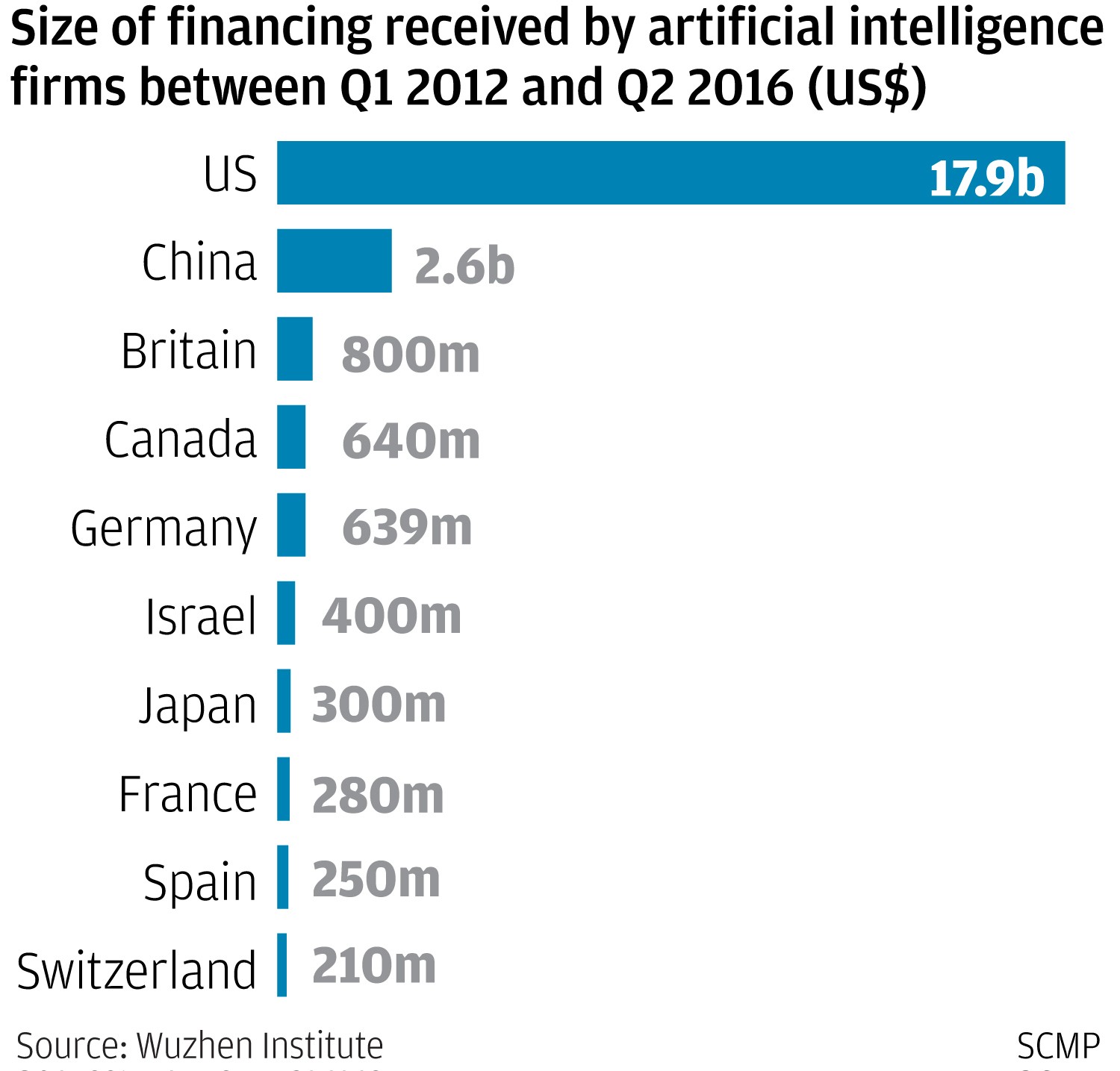
China is not alone in its search for better health through AI. In a recent study by Accenture, the AI health care market in the US is predicted to reach US$6.6 billion by 2021 compared to US$600 million in 2014. However, China already has a smart health care strategy, an integral part of its overall AI strategic plan released in July 2017.
Advertisement
Advertisement
Select Voice
Select Speed
1.00x