Advertisement
South China Sea tensions: does the US have an endgame, beyond war?
Mark J. Valencia says the US’ new, more confrontational approach to China’s actions in the South China Sea is based on misconceptions and disingenuous thinking – and could provoke conflict if Beijing isn’t prepared to back down
4-MIN READ4-MIN

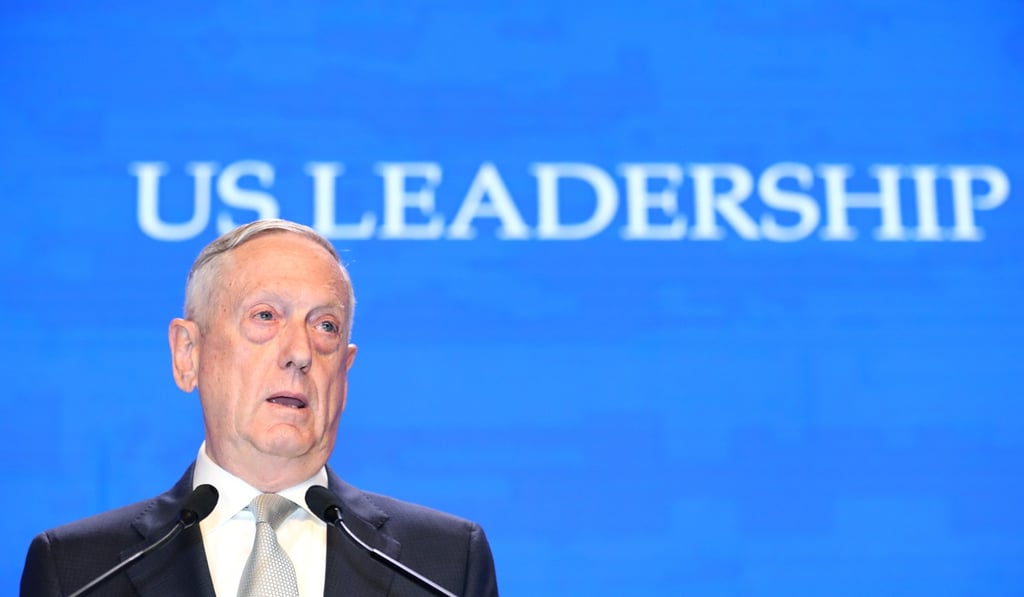
At last week’s Shangri-La Dialogue, US Secretary of Defence James Mattis asserted that China’s “militarisation” of its occupied features in the South China Sea is “for the purposes of intimidation and coercion”. Indeed, it seems the US has decided to step up pressure in the South China Sea. However, this policy shift is based in part on misperceptions that could easily lead to conflict.
This new US hard line towards China was officially manifested in its December 2017 National Security Strategy that declared China a “strategic competitor” and “revisionist” nation regarding the existing international order. On May 23, the Pentagon announced it had withdrawn its invitation to China to participate in the 2018 Rim of the Pacific Exercise (RIMPAC) – the world’s largest multinational military exercise. It said “China’s behaviour [in the South China Sea] is inconsistent with the principles and purposes of the RIMPAC exercise.”
Advertisement
This slight was followed four days later by a provocative first: a freedom of navigation operation within 12 nautical miles of the Paracel Islands, including Woody Island, that “violated” China’s requirement of prior permission for warships to enter its territorial waters. Woody Island is China’s largest military outpost in the South China Sea and where one of its H-6K strategic bombers recently landed. The US ships were confronted by Chinese warships that, according to the US, behaved in an “unprofessional manner”.
On May 29, Mattis said the rescinded invitation was a “relatively small consequence” and that “there are much larger consequences in the future”. The US has also changed the name of the Pacific Command to the Indo-Pacific Command, indicating a hope that India will help to contain China. The commander, Admiral Harry Harris, said on May 30 that "without focused involvement and engagement by the United States and our allies and partners, China will realise its dream of hegemony in Asia.”
Advertisement
Select Voice
Select Speed
1.00x