Can VR and 3D mapping save China’s cultural history from tourists, earthquakes and climate change?
Technology is being used to digitally preserve Dunhuang’s Mogao Caves as mass tourism takes its toll, while drone footage and photos are helping groups such as CyArk create 3D models of heritage sites across the globe

This is where China begins. The Mogao Caves, which straddle key points on the Silk Road in China’s western Gansu province, are as precious as they are delicate.
Also known as the Thousand Buddha Grottoes, they form a system of 492 temples near the city of Dunhuang that contain some of the finest examples of Buddhist art in China, some dating as far back as AD366. Between them the caves contain some 45,000 square metres of exquisite murals and 2,415 coloured sculptures, many fashioned from clay, wood and straw.
How China can reclaim its lost cultural heritage
It may sound intriguing, but that’s the problem. Much of the artwork on the cave walls is deteriorating, a problem attributed to a surge in tourist numbers at the site, which became a Unesco World Heritage Site in 1987.
“Carbon dioxide exhaled by the visitors builds up in the caves, resulting in an increase in temperature and humidity, which further degrades the murals and sculptures,” says Wang Xudong, associate director of the Dunhuang Research Academy.
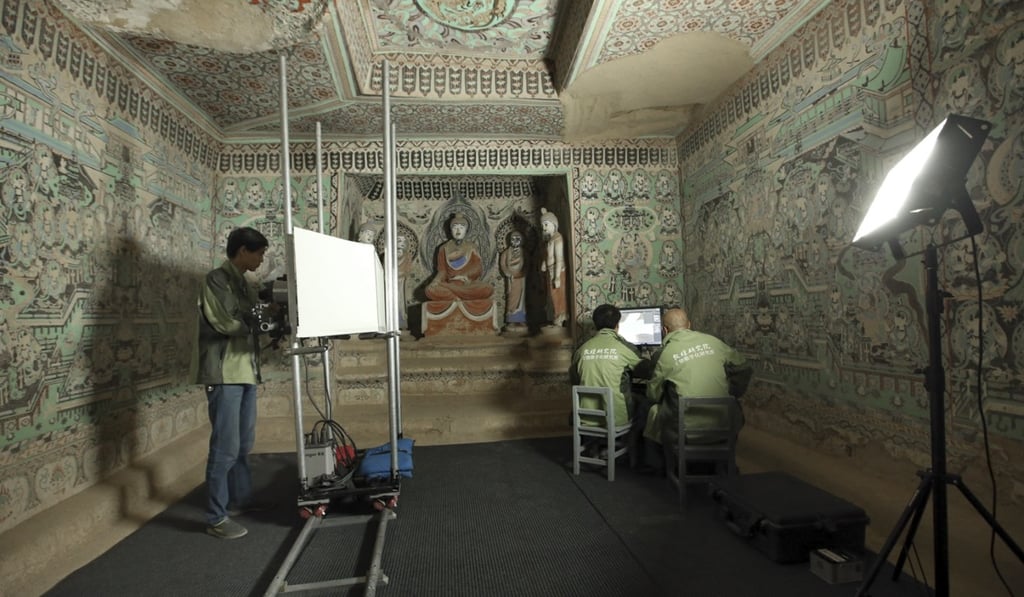
But experts have come up with a potential solution: digital mapping to create virtual reality (VR) caves that can be visited by anyone, anywhere.