Advertisement

Science fiction’s new golden age in China, what it says about social evolution and the future, and the stories writers want world to see

Recent Hugo Awards for Liu Cixin and Hao Jingfang have shone spotlight on new generation of Chinese sci-fi writers; we talked to some about their hopes and the deeper meaning of their works at a recent Hong Kong conference

Reading Time:5 minutes
Why you can trust SCMP
From left: sci-fi authors Hao Jingfang, Xia Jia and Regina Wang. Photo K.Y. Cheng
Rachel Cheungin Shanghai
The science-fiction genre in China was little known before Liu Cixin was honoured with the Hugo Award for best novel in 2015 for The Three-Body Problem. The first book in Liu’s Remembrance of Earth’s Past trilogy, it tells of an alien invasion during the Cultural Revolution and has sold more than a million copies in China alone. The English translation was recommended by Facebook CEO Mark Zuckerberg to members of his book club, and praised by former US president Barack Obama as “wildly imaginative, really interesting”.

Last year, Liu’s compatriot Hao Jingfang earned a Hugo Award for Folding Beijing, in which the city is divided into zones, each with a different number of hours in the day.

Liu has been nominated for another Hugo Award this year, for the final episode in his trilogy, Death’s End.

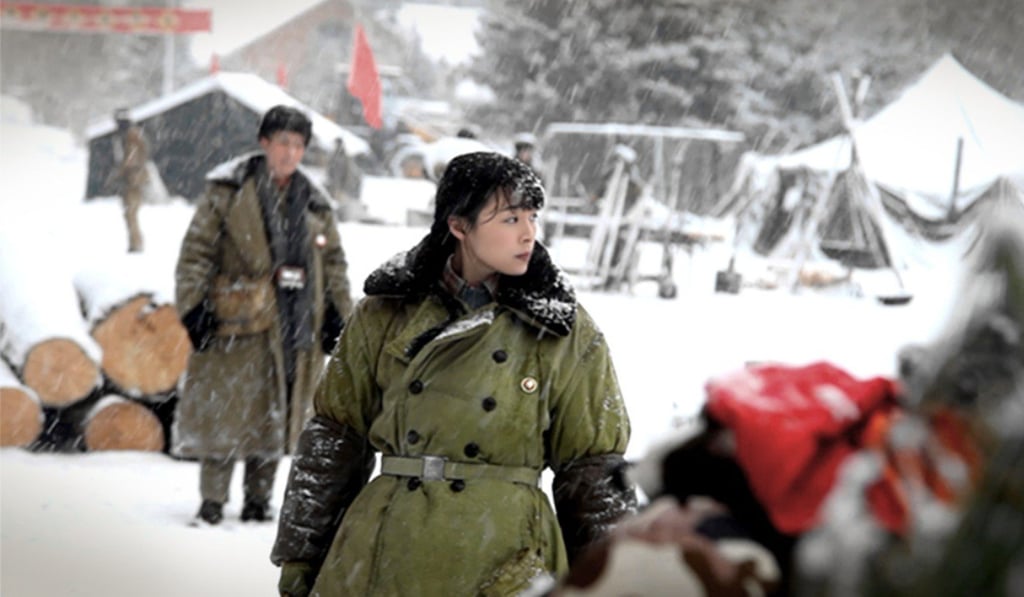
The two winning books are now being adapted for the big screen in China, marking a turning point for Chinese sci-fi and potentially expanding the genre’s exposure globally.

Advertisement

Some 104 original sci-fi titles were published in China in 2016, compared to 75 the previous year, and 461 novelettes were released last year.

Author Regina Wang Kanyu, 27, a long-time sci-fi fan, has witnessed its growth in recent years. “It’s the golden age of Chinese science fiction,” she says.
Advertisement
Zhang Jingchu in a still from The Three-Body Problem.
Advertisement
Select Voice
Choose your listening speed
Get through articles 2x faster
1.25x
250 WPM
Slow
Average
Fast
1.25x