How China censors its internet and controls information, from Great Firewall to 50 Cent Army: two new books explain
Two new books from US academics look at the methods China uses to control information, promote its viewpoints and discourage access to sensitive topics, but also how censorship is a tax on the country’s tech sector

The internet was supposed to have delivered China into freedom by now. But that optimistic consensus has been proven wrong so far. In their books, academics Rongbin Han and Margaret Roberts attempt to explain why.
Han, an assistant professor at the University of Georgia, was a student at Peking University when the impact of the internet was first felt in broader society. But the vibrant discussions the internet initially spurred would prove too much for the ruling Communist Party which, over time, has become more sophisticated in reasserting control over information.
Debt ‘at the core of Chinese growth’, argues Australian financial journalist
To frame the internet and its users in opposition to the government misses its real effect, Han warns in his new book Contesting Cyberspace in China: Online Expression and Authoritarian Resilience. The internet enables a pluralisation of discourse – meaning that, even though the state is not always leading the conversation, the diversity of opinion among netizens, including many who genuinely support the state, work against any concerted effort against the regime.
Han offers an often amusing guide to the factions, rhetoric and bewildering slang that dominate online debate. He enlightens readers on the official “50 Cent Army” of paid commentators who promote the government’s viewpoints, and the unofficial group of pro-party netizens who frequently attack government critics as pawns of the West.
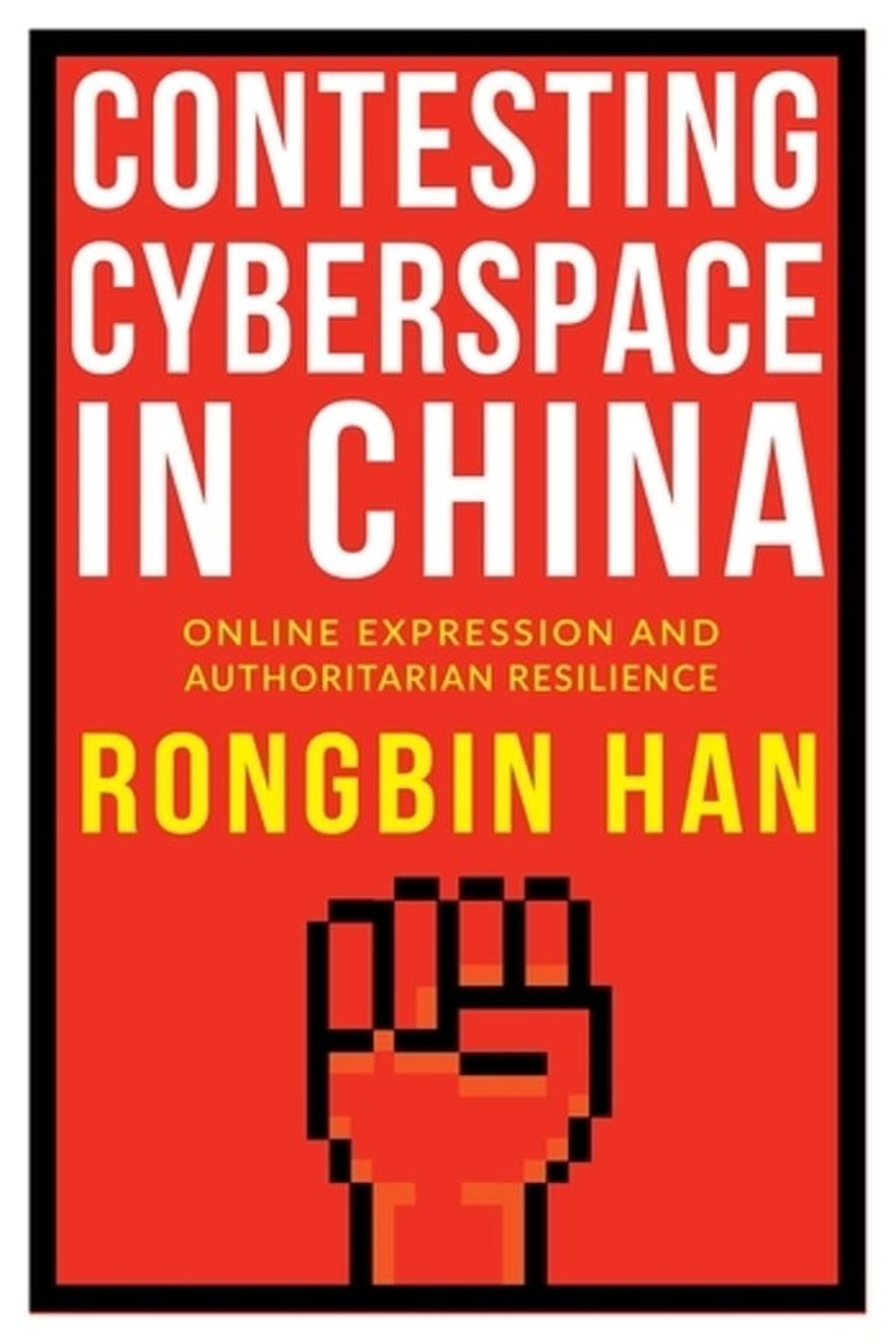
Han is clearly still enthralled by the online bulletin boards through which he first encountered the internet. But his nostalgic attention to Web 1.0 neglects the Web 2.0 of social media, chief among which is WeChat. In researching the Chinese equivalents of Reddit or 4chan instead of Facebook, Han draws conclusions on the basis of polarised internet subcultures which are not necessarily representative of the Chinese internet as a whole. Nonetheless, his timeline of Chinese internet regulation, the various agencies involved, and his in-depth look at the “50-Cent Army” are insightful.
Where Han’s approach is ethnographic, Roberts’ is sociological and data-driven. Roberts, an assistant professor at UC San Diego, argues in Censored: Distraction and Diversion Inside China’s Great Firewall that the government recognises it cannot possibly control all of the internet. Instead, it engages in a “porous censorship” that targets the most sensitive content and seeks to keep all but the most motivated from accessing it. (Her research suggests these tend to be the more educated and wealthy, with a strong interest in politics.)