Master carver uses mammoth tusks to keep 3,500-year-old art alive
Master carver turns to preserved prehistoric mammals to turn out mammoth new projects
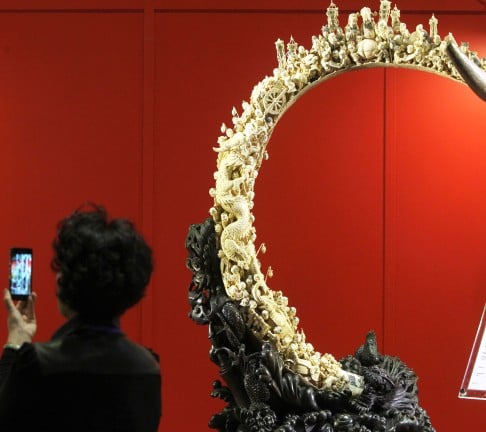
Hongkongers have the chance to see more than 200 pieces of mammoth tusk carved by ivory master carver Chu Chung-shing and his 100-strong team at a free show at the Convention and Exhibition Centre today and tomorrow.
The elephant's protection status was upgraded from Appendix II to Appendix I of the Convention on International Trade in Endangered Species of Wild Fauna and Flora, which demands restrictions on commercial trade.
After going through a brief and tough period of transition that almost left him bankrupt, Chu turned to mammoth tusks when those long buried in the Siberian tundra came up for sale after the fall of the Soviet Union.
The highlight of the exhibition is a work entitled Thousands of Arhats for our Prosperous Country , which was shown at the 2010 World Expo in Shanghai and is estimated to be worth about 540 million yuan (HK$680 million).
The 4.65-metre-long work was made from 500kg of mammoth tusks and features 1,000 Arhats - the Buddhist term for someone who has attained nirvana - each one carved with a different facial expression, surrounding five Buddhas.