China’s mobile payment systems put to the test on a cash-free day out in Shenzhen
Armed with a Chinese bank account, some ID and a smartphone, we test out the city’s cashless system, taking cabs, visiting markets, eating in a restaurant and using mall toilets using WeChat Pay and Alipay mobile payment systems

Two hundred yuan (30 US dollars, HK$235) for a SIM card with one gigabyte of data. “It’s a really good deal,” the salesman reassures us. We are in the southern Chinese city of Shenzhen and about to spend a day there without a cent in hard cash. But first, we need that mobile data – an absolute essential, second only to a smartphone.
“Later you can just top it up online,” the salesman adds. I hand him two crumpled 100 yuan banknotes to pay for the SIM card. That is the last time I will use cash during my time in the city, a hotbed of innovation nicknamed China’s Silicon Valley.
With more people opting to pay for goods and services using their smartphones, the idea of a cashless society has become a hot topic. But how do mobile payments work in reality?
Alibaba and Tencent kick off cashless payment promotions
I had already made an earlier visit to the city to open a Chinese bank account. Now that I’m back, I need to set up phone “e-wallets” for China’s two most popular mobile payment systems (MPS): WeChat Pay, owned by Tencent, and Alipay, owned by the Alibaba Group (which also owns the South China Morning Post).
The Chinese government enforces real-name registration, so I must verify my identity using an official document – in this case, my home return permit – and link the e-wallet to my new bank account. The staff at the bank where I set up my account complete the entire activation process for me, making things a lot easier.
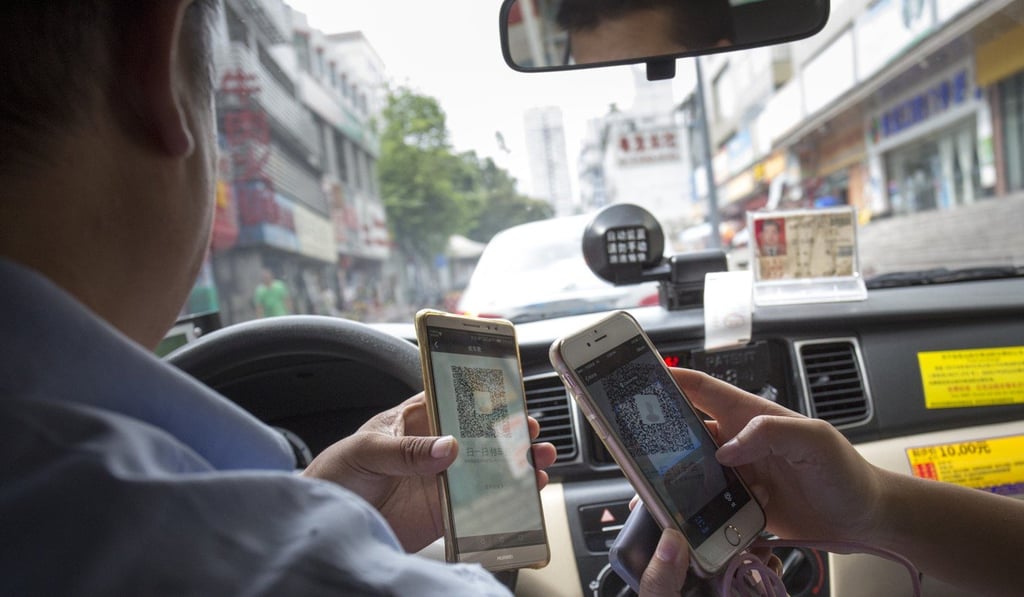
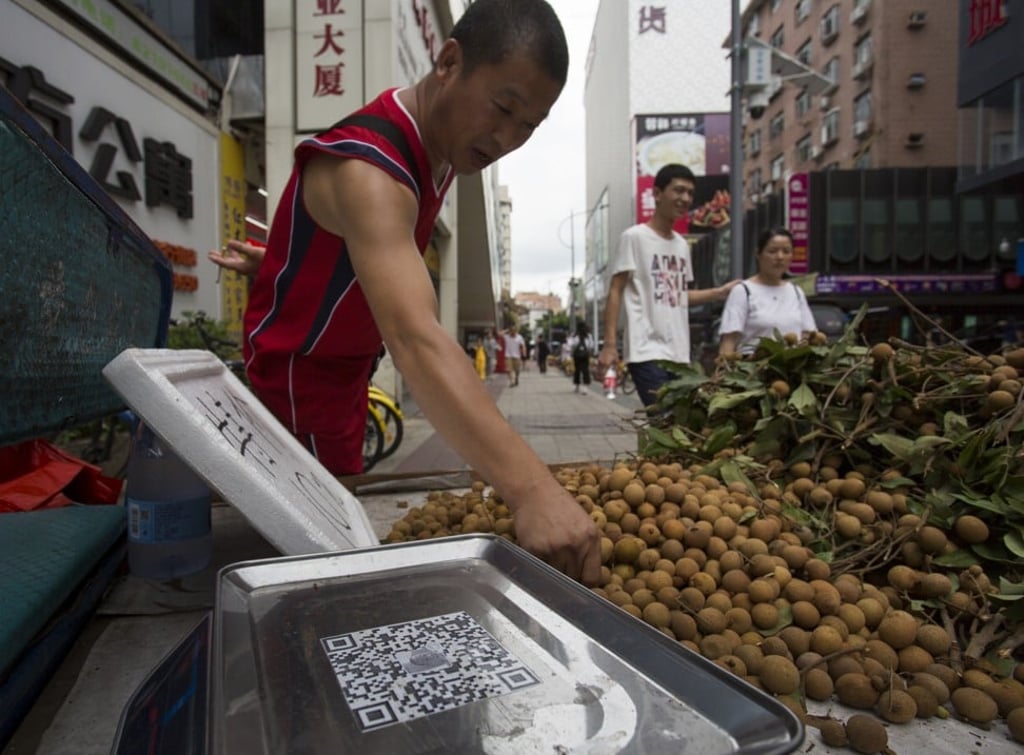
We head to Dong Men Ding Plaza, a three-storey mall filled with stalls selling street food: rice-stuffed chicken wings, grilled skewers, boiled crayfish, crabs, you name it. Here, cash used to be king, but no longer.