What Shanghai can teach Hong Kong about conserving buildings of historical value
Chinese city sees its heritage buildings as prestigious assets that can attract some of the world’s leading companies, while Hong Kong turns a 19th century police station into a supermarket and lets developers erase heritage

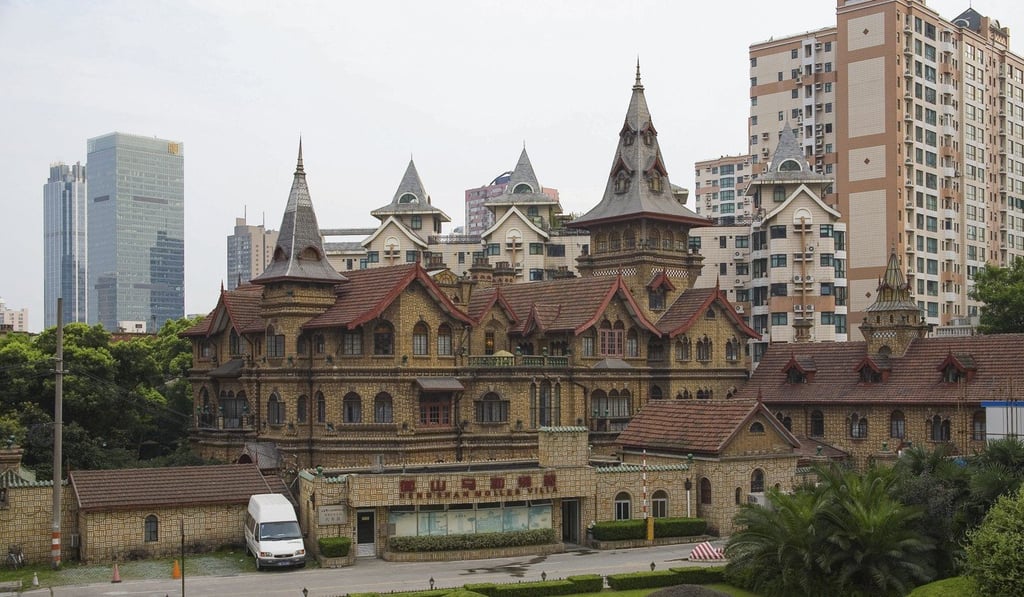
While it is hardly a classic representative of colonial-era architecture, the Moller Villa hotel is one of six landmarks recently added to Shanghai’s growing list of 20th century architectural treasures – evidence that the modern financial centre has embraced the idea that old buildings add value to a city.
Moller Villa is a rather gaudy edifice built in 1936 in the former French Concession for the British shipping magnate and equestrian sports aficionado Eric Moller, who had the fairy-tale mansion designed to suit the tastes of his young daughter.
Hong Kong’s heritage sites face continued threat despite government grading system
It is certainly distinctive – and shows that the economic value of old buildings in Shanghai is not based purely on their architectural or historic merit.
“It is differentiation that creates a monetary premium,” says Donovan Rypkema, of Heritage Strategies International, who lectures on the economics of historic preservation at the University of Pennsylvania in the United States.
“When, today, cities are competing not just with other cities in their country or region, but literally every other city in the world, those cities that become more and more like other places, rather than highlighting their differentiation, are going to ultimately become less competitive,” says Rypkema.
Shanghai grasped this concept around 10 years ago; it successfully uses its heritage to highlight its competitive advantage as a vibrant and attractive place to live. Protecting old buildings in Shanghai is not just about sentiment or vanity; it’s hard economics and integrated into the planning of the local urban economy.