Film review: Ip Man-The Final Fight
Movies about real-life wing chun master Ip Man (1893-1972) have a long way to go before they can rival those of his fellow Foshan native, martial artist-physician extraordinaire Wong Fei-hung (1847-1924), in number. But in recent years, there have been more films about Bruce Lee's teacher than the old-time kung fu folk hero.
Movies about real-life wing chun master Ip Man (1893-1972) have a long way to go before they can rival those of his fellow Foshan native, martial artist-physician extraordinaire Wong Fei-hung (1847-1924), in number. But in recent years, there have been more films about Bruce Lee's teacher than the old-time kung fu folk hero.
Preceded by Wilson Yip Wai-shun's Ip Man (2008) and Ip Man 2 (2010), his own earlier Ip Man - The Legend is Born (2010) and Wong Kar-wai's The Grandmaster (from earlier this year), Herman Yau Lai-to's Ip Man - The Final Fight is the fifth Ip Man semi-biographical martial arts drama made in the past five years.
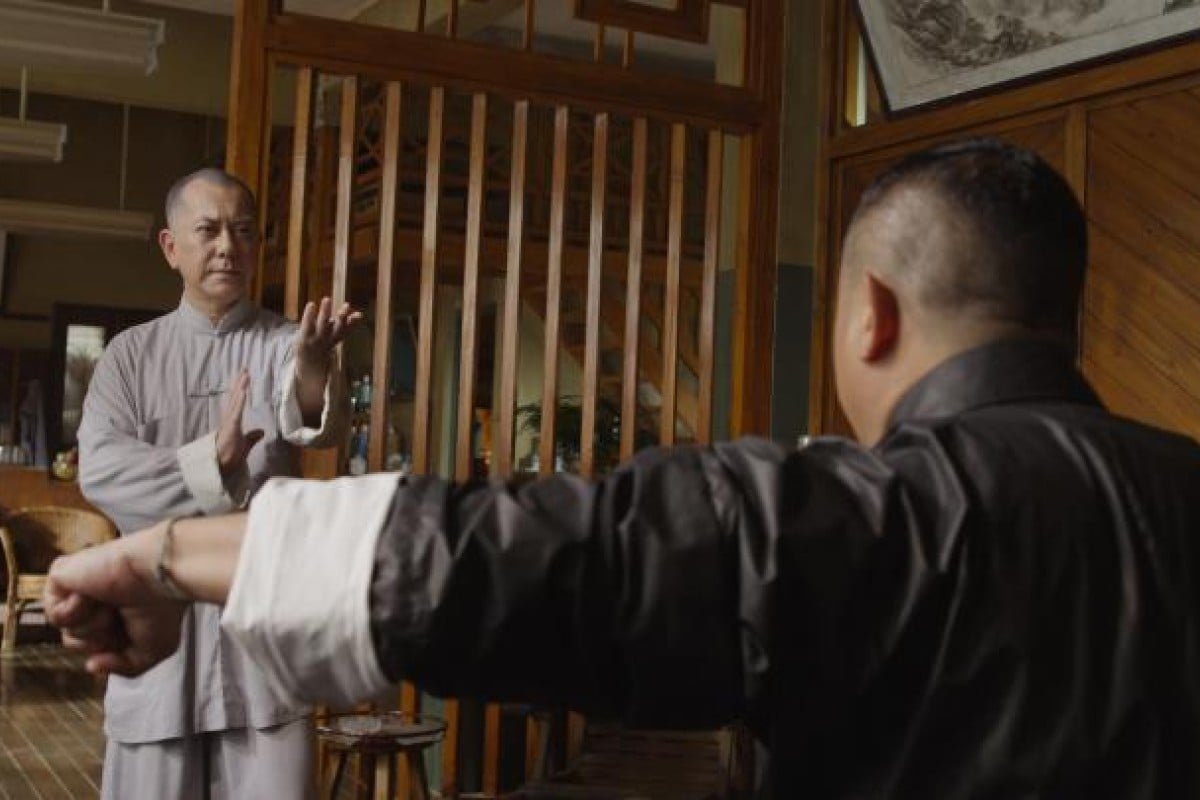
In light of Anthony Wong Chau-sang's (above left with Eric Tsang Chi-wai) reputation for being a one-time bad boy of Hong Kong cinema, it can seem ironic - or be seen as a sign of how great an actor he is - that his Ip Man may well be the most mature and dignified of the ones seen on screen to date.
In any case, it's also true that the modest gentleman protagonist of Ip Man - The Final Fight is the most advanced in years, since the film focuses on the middle to latter part of his life - after he moved to Hong Kong in 1949. Although he was married and had children at that point in his life, circumstances resulted in Ip largely living apart from them and on his own during his time in the Fragrant Harbour.
So while family members make brief appearances in this atmospheric local-oriented movie, Ip is shown interacting more with people such as his disciples (including ones played by Timmy Hung Tin-ming, Gillian Chung Yan-tung and Jordan Chan Siu-chun) and - since this is a film with "fight" in its title after all - sparring and duelling with a number of martial artists (including those essayed by Tsang, Ken Lo Wai-kwong and Xiong Xinxin).