Celebrating the centenary of poet Dylan Thomas' birth
As the centenary of Dylan Thomas' birth approaches, Gary Jones assesses the Welsh poet's legacy andlooks at a bid to bring his words to the mainland
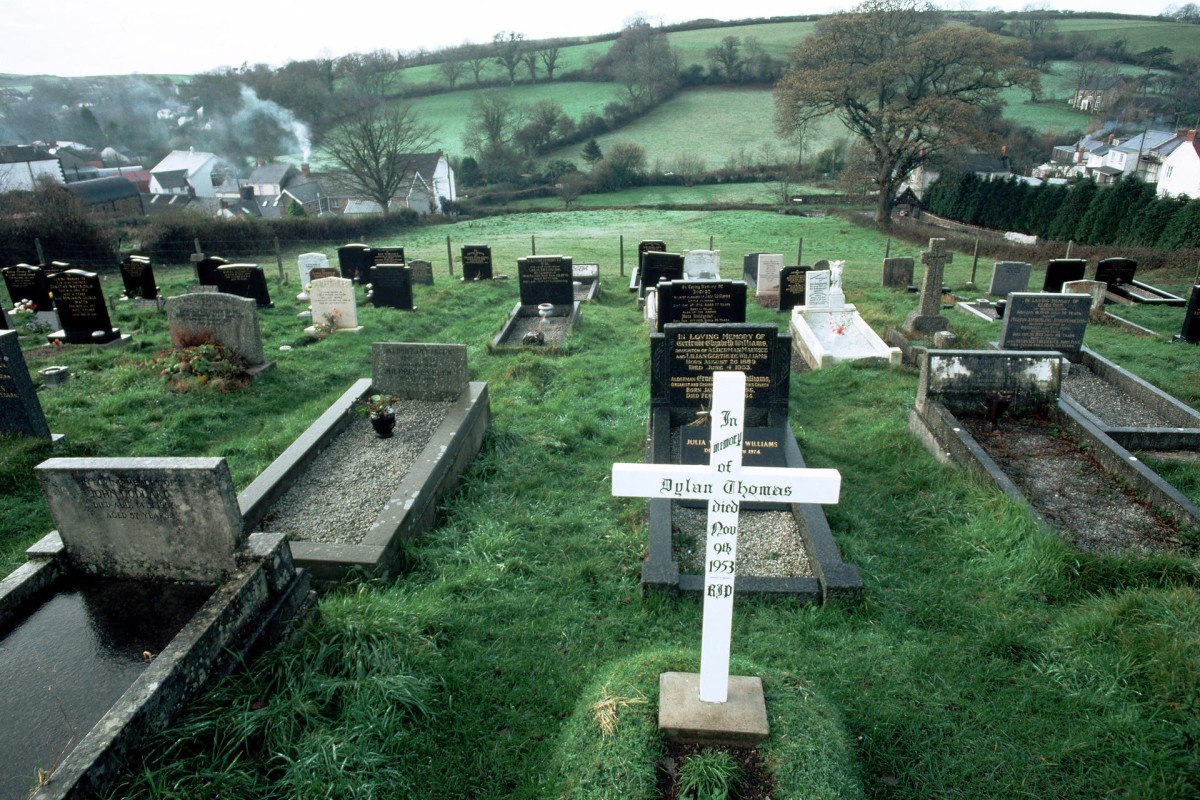
Dylan Thomas never visited China during his short lifetime. The Welsh poet and writer - most noted for his innovative, rhythmic use of words and intoxicating imagery - did, however, refer to the country in a revised version of his Reminiscences of Childhood, which he read aloud on radio in 1945, and again in 1953, the year of his death.
"I was born in a large Welsh town at the beginning of the Great War, an ugly, lovely town - or so it was and is to me - crawling, sprawling by a long and splendid curving shore where truant boys and Sandfield boys and old men from nowhere beachcombed, idled and paddled, watched the dock-bound ships or the ships streaming away into wonder and India, magic and China, countries bright with oranges and loud with lions …"
The "ugly, lovely town" Thomas spoke of on the BBC's Welsh Region Home Service was Swansea, where the revered scribe - author of haunting poems And Death Shall Have No Dominion and Do Not Go Gentle Into That Good Night, and the polyphonic "play for voices" Under Milk Wood - was born 100 years ago on October 27, 1914. And, finally, his dream-like musings of a journey to China appear scheduled to become an after-life reality.
Many cultural events have been arranged for the centenary of Thomas' birth, including a non-stop, 36-hour "Dylathon" of his writings - timed to end on the hour of Thomas' birth - at Swansea Grand Theatre. Readings will be made by the likes of Prince Charles, actor Ian McKellen and former Wales rugby captain Ryan Jones.
Earlier this year, however, in a less star-studded but similarly groundbreaking event, a low-key academic visited Swansea on a mission to produce the definitive guide to the writer's oeuvre in Chinese. Professor Wu Fusheng has now translated 25 important and representative pieces of Thomas' work. A book is scheduled for release in 2015.