India’s first female rock band sings for gender equality and empowerment
- Meri Zindagi’s songs tackle major social issues that women regularly face in India, such as domestic violence, female infanticide and child marriage
- Band members draw inspiration from the everyday lives and struggles of women

Five women wearing pink saris walk onto the floodlit stage to be greeted by loud cheers from the audience. Accompanied by electric guitar, synthesiser and drums, the lead singer belts out the lyrics of a single from their latest album. The tune is catchy, the beat is foot-tapping and the lyrics are hard-hitting.
Mother, don’t just marry me off / Don’t send me away tied to a groom / Let me study and become somebody / Let me be the one to colour your dreams.
This is India’s first female mission rock band, Meri Zindagi, which means “My Life” in Hindi. Unlike other Indian girl bands, they do not perform covers of popular movie songs. Meri Zindagi’s mission is to use music as a tool to raise awareness about, and combat, gender inequality. Their original compositions tackle major social issues that women face – domestic violence, female infanticide and child marriage.
“We don’t perform only to entertain. We perform to create awareness and sensitise people on the issues that women encounter and to empower girls to follow their dreams,” says 39-year-old Jaya Tiwari, the band’s founder, lyricist and lead singer.
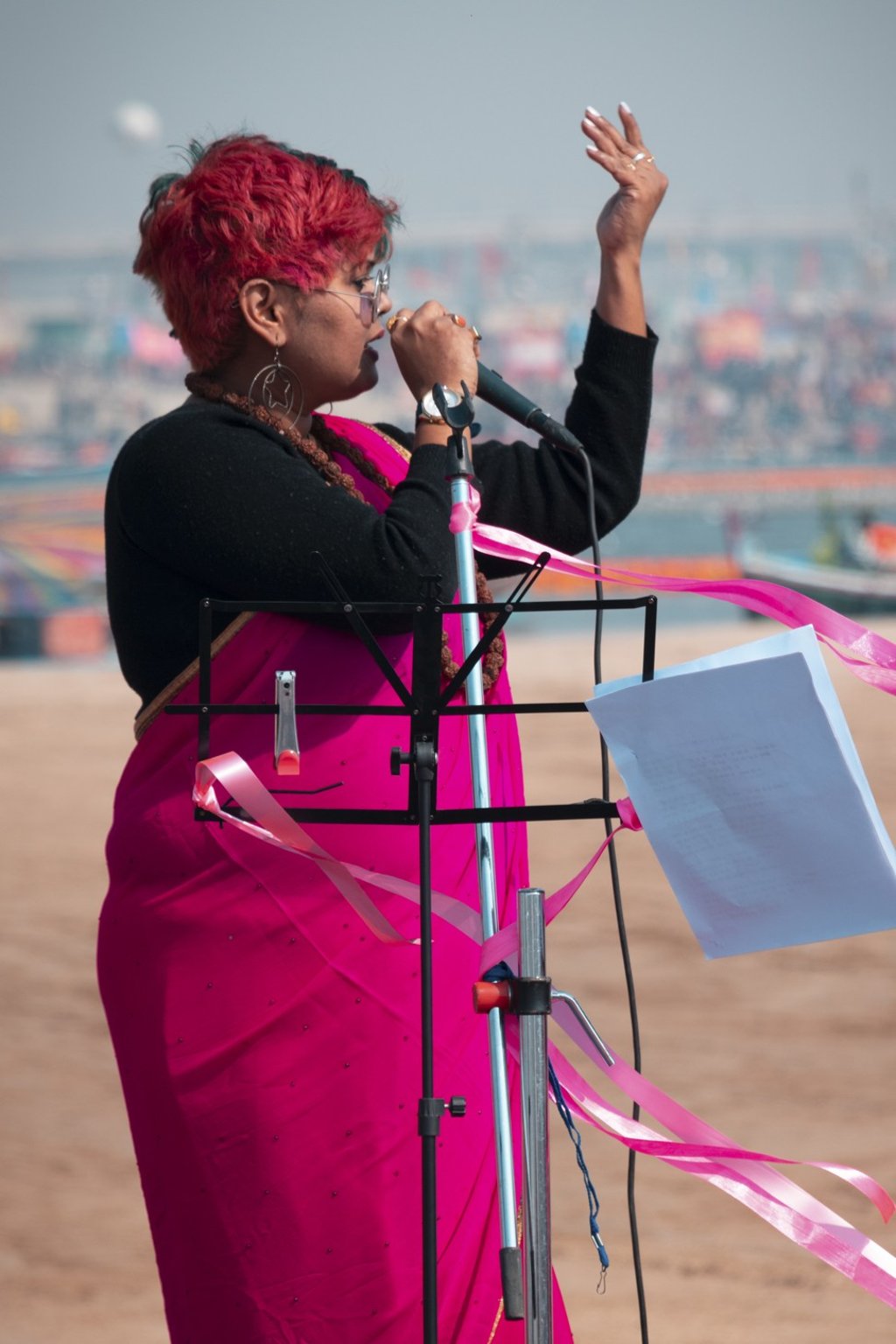
Tiwari grew up in Lucknow, the capital of the northern Indian state of Uttar Pradesh, where Meri Zindagi is based. She was always troubled by the entrenched gender bias against women in society. Nowhere was this more evident than at the orphanage near her home, where boys were adopted within days while orphan girls seldom had any takers.
The older children at the orphanage were mainly girls who had stayed on. Tiwari, a radio disc jockey at the time with a doctorate in music, hit upon the idea of using music to empower these girls.