Why the fashion industry still has so few women at the top, despite some recent high-profile appointments
The role of creative director at a fashion house is so all-consuming even some men struggle for work-life balance; for women, it’s harder still to balance such responsibility with family duties and face down sexist attitudes

Four female designers have recently taken over at old-world European fashion houses, allowing industry commentators to declare the days of a boys’ club of creative directors over. Maria Grazia Chiuri and Clare Waight Keller became the first women directors at Dior and Givenchy respectively, while Natacha Ramsay-Levi takes over Chloe and Bouchra Jarrar is the first woman to lead Lanvin since Jeanne Lanvin founded the brand in 1889.
However, fashion remains an industry dominated by women at every level bar one: the very top. Of the 92 shows on the Paris Fashion Week womenswear schedule, fewer than 30 have female creative directors, and Milan scores even lower with 31 per cent of brands represented by a woman. And on the business side of things, LVMH executive vice-president Delphine Arnault seemingly stands alone among male executives.
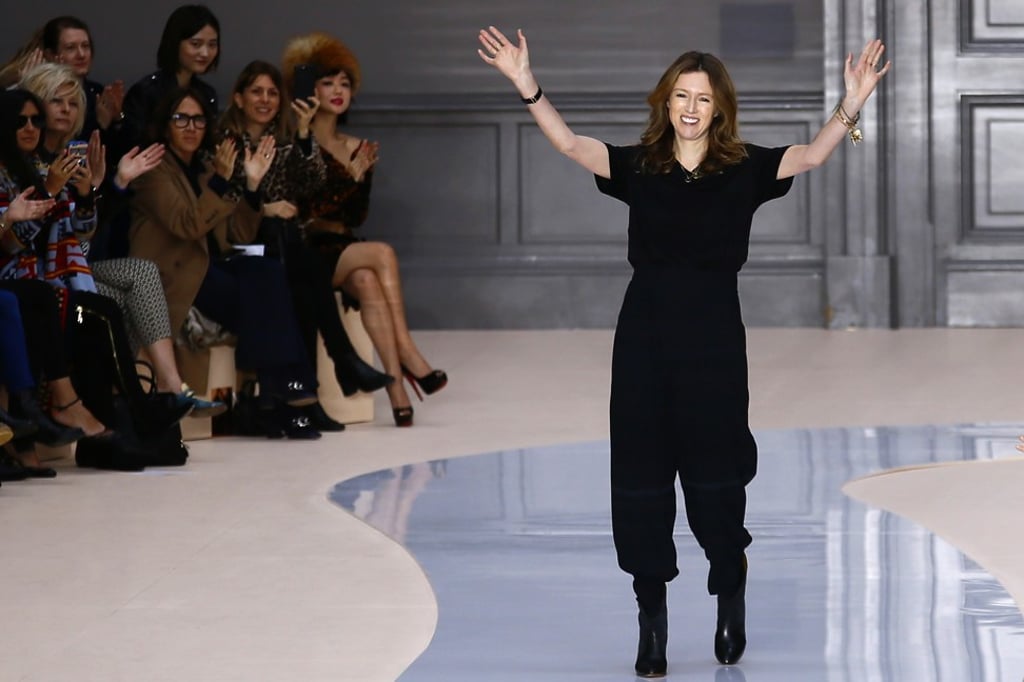
The fashion industry is extremely demanding and women still often have to make a choice between a family life and a career
Many of the world’s leading brands were started by women but success brought changes. Coco Chanel is the most notable example of male control, but Jeanne Lanvin, Madeleine Vionnet, Elsa Schiaparelli, Nina Ricci and Marie-Louise Carven are women whose eponymous labels became influential and were then taken over by men.