K-beauty: the ugly face of South Korea’s obsession with women looking forever flawless
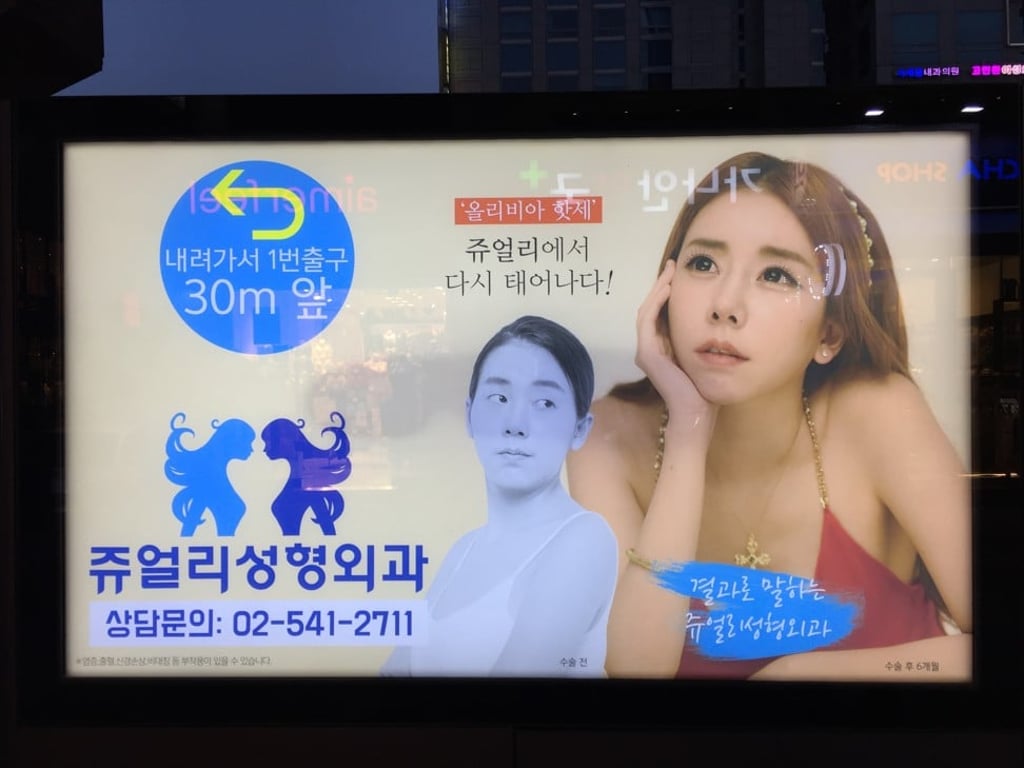
The global buzz around South Korean skincare and cosmetics belies the harsh realities of lookism and sexism faced by Korean women, who can’t leave home without putting on make-up

K-beauty has become a buzzword in recent years, as Korean skincare and make-up trends flash across social and traditional media. From last spring’s “zombie” face mask hype and the much blogged “glass skin” trend, to the barrage of hydrating-animal-mask selfies on Instagram, marketing targets the impression that Korean women have flawless skin.
This romanticised image is held to be true, not only by K-beauty fans or the beauty bloggers promoting it; it’s an image championed by an industry serving one of the world’s top 10 markets for beauty products, one that is estimated to be worth more than US$13 billion this year.
Global sales of South Korean skincare products are projected to reach US$7.2 billion by 2020, according to a report by market research firm Mintel. With posters of perfectly made-up K-pop stars touting CC cushions and clay masks plastered on the walls and websites of cosmetics stores across South Korea, K-beauty would appear to be a cultural phenomenon that is here to stay.
Using every conceivable beauty product – K-beauty experts advocate a highly regimented 10-step routine involving cleansers, toner, serum, masks, moisturiser and more – is less a habit than a necessity for many women living in what is a culturally monolithic and highly patriarchal society.
“For men, the social expectation is: don’t be fat, have a nice haircut, dress OK,” he says. “If all you had to do to succeed as a woman is dress OK, not be too fat, look all right, you’d have a lot fewer problems. And in a culture where female beauty is so regimented, of course you’re going to have all these products.”