Sea sponge may hold key to pancreatic cancer treatment, researchers say
In other health news, a quarter of women experience symptoms other than hot flushes in the lead-up to the menopausal transition, and a muscular dystrophy gene editing trial on dogs paves the way for humans to try it

A small sponge discovered in dark, icy waters of the Pacific Ocean off the US state of Alaska could be the first effective weapon against pancreatic cancer, researchers say. Pancreatic cancer tumours are particularly aggressive and notoriously difficult to treat.
“One would never have imagined looking at this sponge that it could be miraculous,” says Bob Stone, a researcher at the Alaska Fisheries Science Centre.
Blood test may help find early-stage pancreatic cancer, one of the deadliest forms of the disease and often diagnosed too late
Stone discovered the green sponge, called Latrunculia austini, in 2005 while on an expedition to explore the seabed off Alaska. It lives on rocks in patches at depths of 70 to 220 metres. Lab testing has shown that several molecules in this sponge selectively destroy pancreatic cancer cells, says Mark Hamann, a researcher from the University of South Carolina.
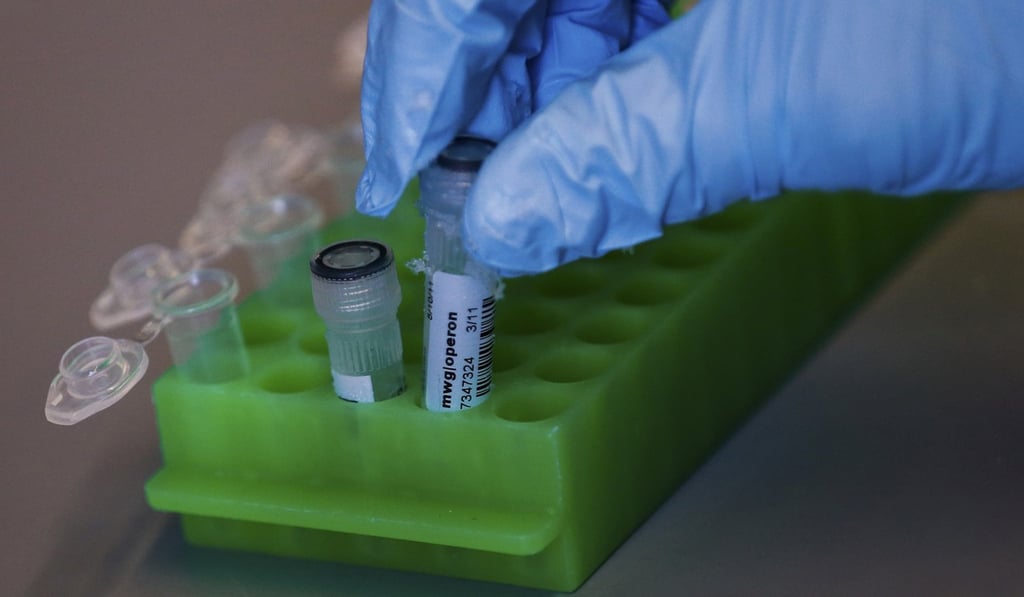
“This is undoubtedly the most active molecule against pancreatic cancer that we see,” Hamann says. “Although there is still much work to be done, it marks the first key step in the discovery and process of developing a treatment.”
This is undoubtedly the most active molecule against pancreatic cancer that we see
Pancreatic cancer progresses slowly, a circumstance which leaves patients in a tough position as late diagnosis means little chance for successful treatment. Patients’ chances of survival at the five year mark for this tumour are only 14 per cent, according to the American Cancer Society.