Video | Meet the meat-free Hong Kong parents on a vegan mission
Members of the Veg Parents Hong Kong group are used to scepticism about raising children on a flesh-free diet, but will consult experts regularly to ensure their ethical and health reasons are not compromising nutrition needs as their child grows

As Emily Sim lays slices of avocado onto a bed of rice and seaweed, she counts each piece with her two-year-old son Henry. “You’re doing well, aren’t you?” she coos, snuggling the boisterous toddler, who asks for more dried mango as he watches his mum prepare the family’s evening meal.
Henry has been raised as a vegan from birth – he doesn’t eat eggs, dairy products or meat. Sim avoids leather, silk and wool in his clothing, and constantly checks bottles to ensure baby lotions are cruelty-free and not tested on animals. “There are some things you can never avoid,” she says. “But we do the best we can.”
Sim, an Australian, runs the Facebook group Veg Parents Hong Kong, which she set up not long after moving to the city with her husband in 2015 – just before Henry was born. She is one of a number of local parents proving that children can thrive as vegetarians or vegans, even in a city where meat- or dairy-free options aren’t easy to spot on menus.
Vegan Hong Kong bodybuilder Hin Chun Chui wrestles protein myths and shows you don’t need meat or dairy to be a winner
The group is a source of information and tip-sharing for its 350 members, who swap recipes, ideas for meat substitution, and advice on the best places to buy food, and also organise meat-free social events. “We have vegans, pescatarians [people who eat fish, but not other flesh], vegetarians ... and many are still eating meat but are trying to give their kids more veggies,” Sim says.
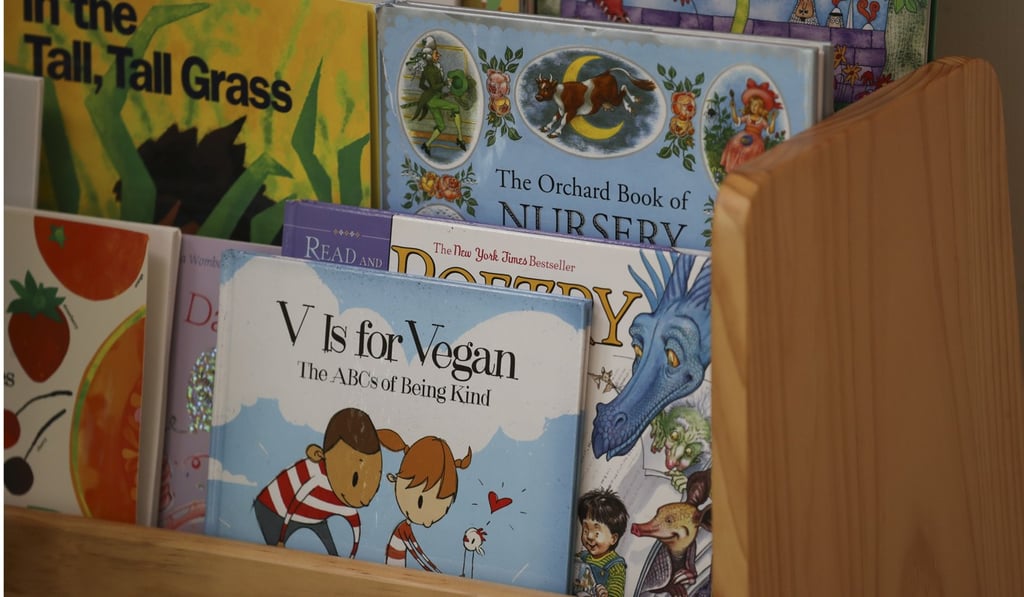
Compared to an adult choosing to make the switch to a non-animal diet, raising a vegan baby comes with extra nutritional considerations, particularly during the nursing phase when the baby’s brain is developing. Mothers who cannot, or choose not to, breastfeed can use soya-based formulas, which, although nutritionally complete, can contain vitamins derived from animals.
The World Health Organisation recommends a plant-based diet rich in vegetables and warns against processed meat, while doctors say babies can be raised safely on a meat-free diet if parents make sure they’re getting enough nutrients.