Smiling can improve running: how to make it genuine, such as thinking happy thoughts or listening to something upbeat
Singing, reminiscing about pleasant memories, thinking funny thoughts – all induce happiness which makes activities feel easier and can help performance, research shows. Frowning and grimacing, though, can do the opposite

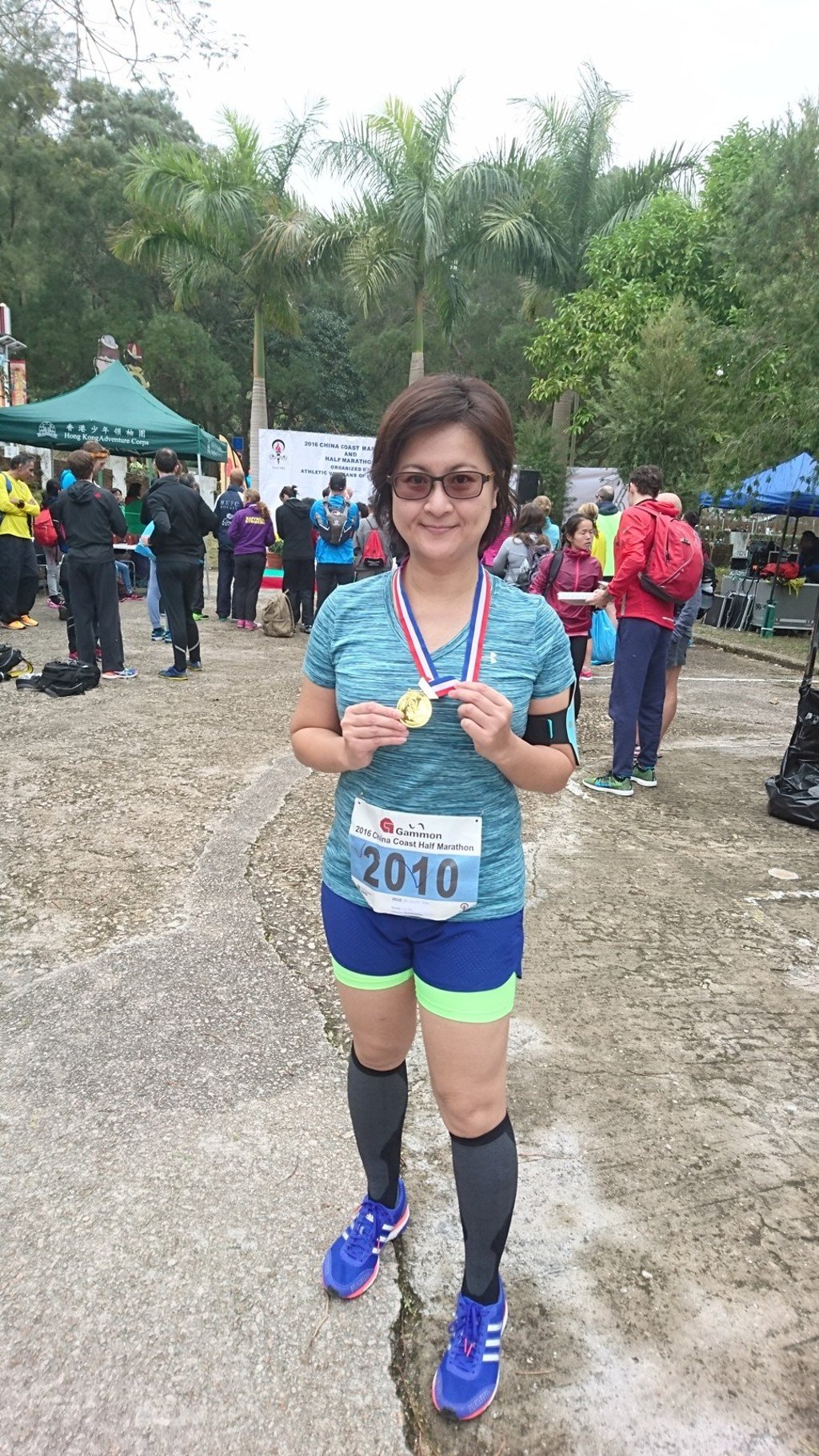
Whenever she runs, Michelle Yuen makes it a point to recall funny memories and think positive thoughts. This strategy doesn’t just relax her body and mind; it also puts a big smile on her face.
“Smiling keeps the nerves at bay and reduces tension in my body,” says the 43-year-old, who describes herself as a casual runner and trains a couple of times a week with the Hong Kong Ladies Road Runners Club. “This makes for a more pleasant and comfortable run, and when I’m enjoying myself I tend to move a little faster, too.”
102-year-old runner who’s setting records around the globe and the diet of wheatgrass, kefir and pulses that fuels her exploits
A recent study by the Ulster University School of Psychology in Northern Ireland confirmed what Yuen and many top athletes believe: that smiling can decrease an athlete’s perception of effort during endurance exercise. The lower the perceived effort, the easier an activity can feel; as a result, athletes are more likely to perform better. A case in point is Eliud Kipchoge, an Olympic marathon gold medallist and arguably the greatest marathoner in the world, who is often seen grinning broadly during a race.
The small-scale study appeared in the journal Psychology of Sport and Exercise in late 2017. It also found that runners were more economical or efficient – that is, they expended less energy – while smiling. Interestingly, only genuine smiles reaped this positive effect because they helped the runners relax more.
Conversely, the researchers observed that frowning or grimacing increased the runners’ sense of how difficult their run was. Runners who frowned were also less economical.
Dr Cindy Sit is from the Department of Sports Science and Physical Education at the Chinese University of Hong Kong. She says that smiling when running works because it induces happiness, a positive emotion.