Exercising when air pollution levels are high can do more harm than good
Exercising when air pollution levels are high can end up doing more harm than good, writes Rachel Jacqueline
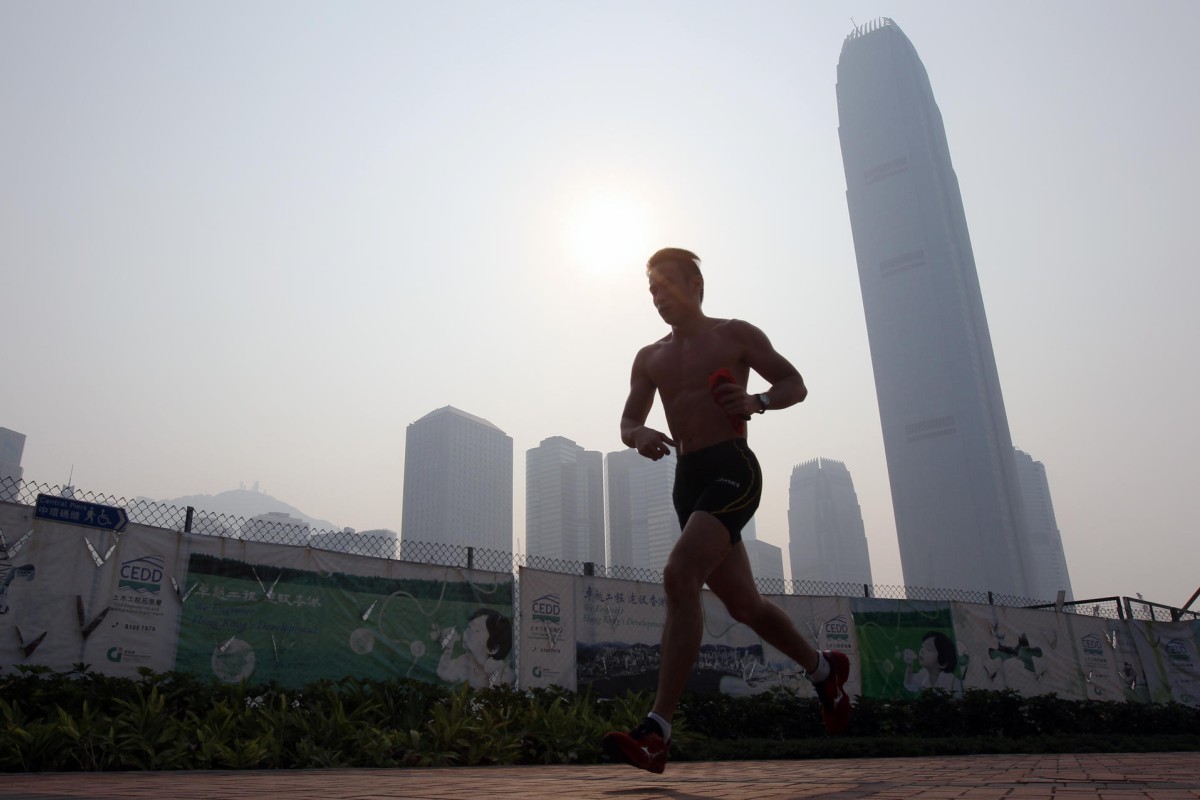
Do you check air pollution levels before exercising outdoors? You should. Although regular exercise is good for us, exercising in poor air may wipe any short-term fitness gains.
Worse still, you could be putting your body at risk of serious illness and - more worryingly - long term, irreversible damage.
Exposure to air pollution is a sad fact of life in any city, particularly in Hong Kong. The "vertical city" is a victim of its design, festering in roadside emissions and regional smog trapped among the city's many high-rises, particularly on days with little wind.
Air pollution has the potential to damage virtually every tissue in the body
At rest, we have some basic protection measure against pollution - our nose. "The olfactory tissue and nose hairs act as a kind of first defence," says Dr Michael Tse of the Active Health Clinic at the Institute of Human Performance in Hong Kong.
Pick up the pace and we radically increase the rate and extent of exposure. "When you exercise, the rate of breathing is increased and you take deeper breaths," says Tse. "At higher intensities, you also breathe through your mouth to get sufficient oxygen, leading to a direct intake of pollutants."
The lungs and cardiovascular system take the first hit, with every lungful of polluted air damaging the fine tissue, causing inflammation. Signs of exposure include chest tightness, wheeziness, coughing and a burning sensation in the throat and lungs.
"As inflammation is repeated, a person is at greater risk of developing asthma, bronchitis, chronic obstructive pulmonary diseases, damage to the mucous producing glands in the airways, and has an increased risk of pneumonia," says Professor Anthony Hedley, creator of the Hedley Environmental Index and Emeritus Professor at the University of Hong Kong's School of Public Health.