Plans for container homes in Hong Kong get a mixed reaction from experts
With developers pushing to build cargo container accommodation, architects can’t agree on whether they are an unreliable, risky option or an affordable, ready-made solution to the housing problem

They’ve been used as trendy “tiny homes”, student accommodation and extravagant luxury houses. A whole shopping mall has been crafted from them, plus many a pop-up restaurant. Now the humble shipping container is being used for swimming pools.
They may be versatile, but whether a metal box is a viable mass housing solution for Hong Kong, as has been mooted, is a matter of conjecture. What do architects with experience of them think?
Thinking inside the box: Hong Kong container homes could be on the way
American architect Mark Hogan, of OpenScopeStudio in San Francisco, is firmly in the “no” camp.
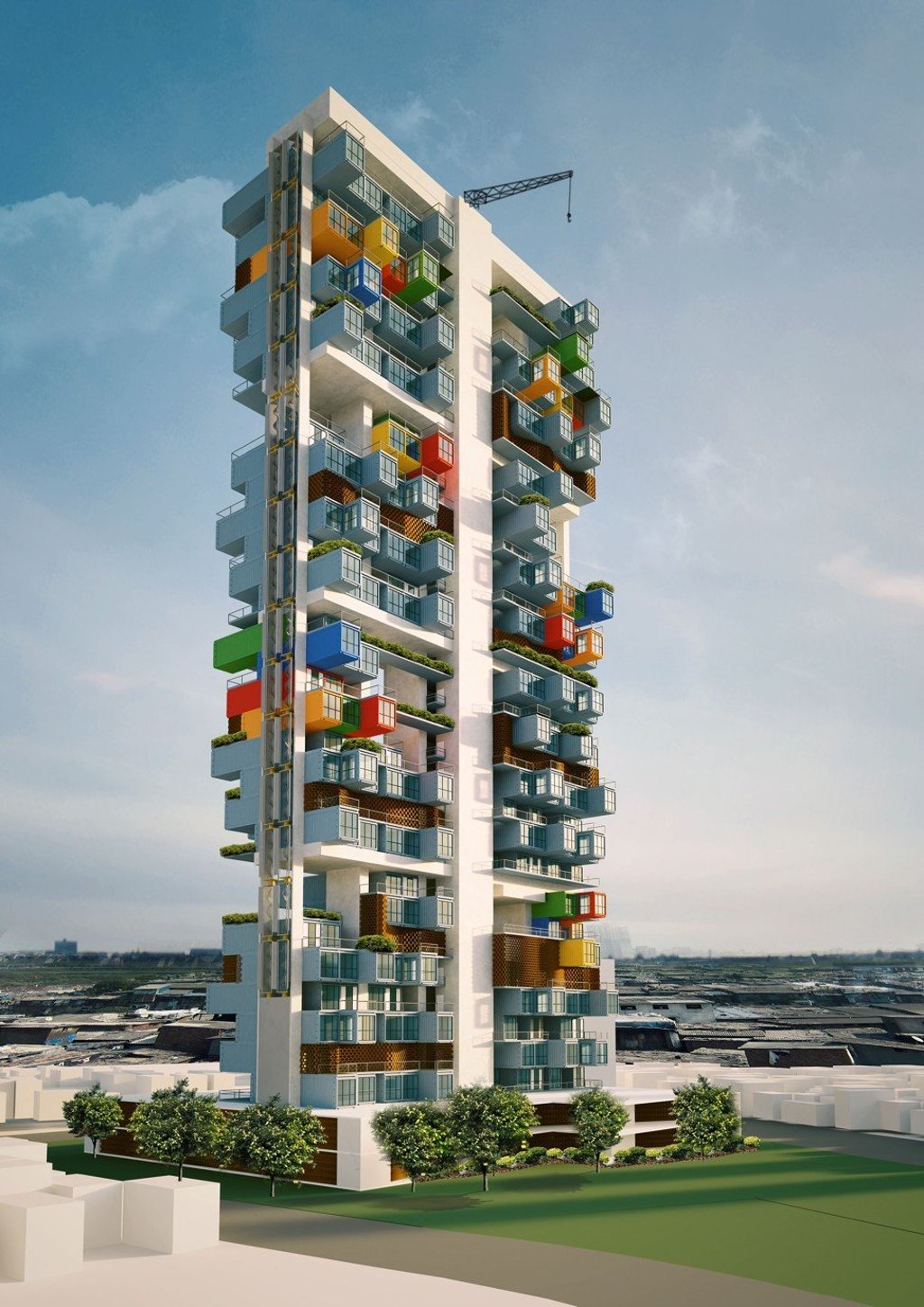
A proposal to build a shipping container skyscraper to provide temporary housing in a slum in Mumbai, India – which won GA Design Consultants an international ideas competition in 2015 – sparked a Twitter rant from Hogan about the unsuitability of containers for habitation. Two years on, his views haven’t changed.
He is not opposed to prefabrication in general, and has done a container project himself – a social gathering place and temporary storefront between the SoMa and Mission Bay neighbourhoods of San Francisco, opened in 2015 – but is yet to see examples of containers being significantly better or cheaper than standard construction for permanent housing. Besides, Hogan adds, they don’t make economic sense for Hong Kong.
“Shipping containers cannot be stacked to high-rise height without an added secondary structural frame,” he says. “In Hong Kong, stacked containers would be limited to about nine storeys, which means a short building put on some of the world’s most expensive land. I’d much rather see the capacity of those sites maximised with true high-rises in concrete, steel or cross-laminated timber.”