Ancient trees suggest Genghis Khan's success was built on grass
Period of warmth and rain, revealed in the rings of centuries-old pines, carpeted Central Asia's steppes with grass for conqueror's horses

Scientists have discovered an explanation for the phenomenal success of Genghis Khan in a most unlikely place - tree trunks.
Amy Hessl of West Virginia University and Neil Pederson of Columbia University in New York conducted a study on a stand of millennium-old Siberian pine trees growing in cracks on a lava flow in northern Mongolia.
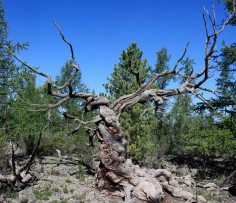
"Trees are wonderful natural archives of environmental history" Hessl told the Sunday Morning Post.
"The trees we studied can live for over a thousand years and they are extremely sensitive to changes in soil moisture. The changes create variability in the size of their annual rings and this tells us a lot about past climate conditions."
The mild temperatures and plentiful rain would have caused Central Asia's usually dry, rocky steppes to sprout a luxuriant carpet of grass. Hessl said this sudden profusion contributed to Khan's success.