Stories behind Hong Kong districts: Tsuen Wan – from Hakka farms to textile mills to a post-industrial future
Shanghai industrialists transformed a rural district with textile factories that spawned shanty towns for their workers; new town status, MTR’s arrival and industry’s decline were cues for rapid residential and commercial development

“I know much of it is ugly.”
That was Jimmy Hayes, Tsuen Wan’s town manager, quoted in the July 20, 1977 edition of the South China Morning Post. They aren’t the words you might expect from a municipal leader, but they were truthful: the scene in 1970s Tsuen Wan wasn’t exactly postcard material.
Yet it was vital, thriving and important. Hong Kong’s economy was booming and textile factories were opening in Tsuen Wan faster than the government could build infrastructure. Thousands of workers wove silk, dyed cotton and assembled garments for export overseas.
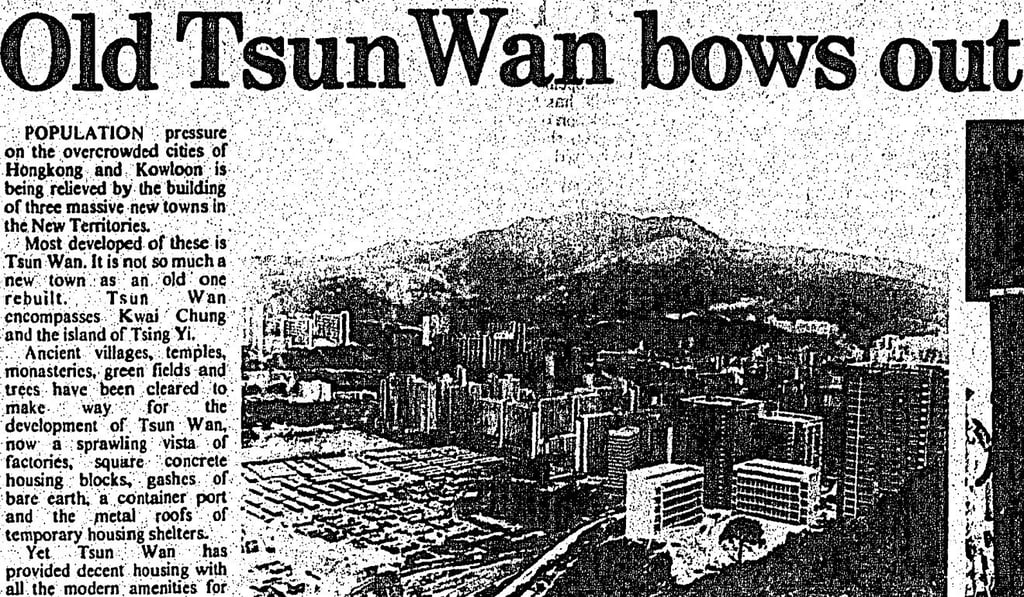
When Hayes spoke to the Post in 1977, the district was home to 550,000 people, with plans for another half a million. Much of the population had been relocated to public housing estates from hillside shanty towns. Others lived in private estates that sprang up around the future Mass Transit Railway (now called simply MTR) station, whose construction was announced in 1975 and which was finally completed in 1982.