Lady Bountiful
To anyone who knew her, Cecilia Chang was the gift that just kept on giving, be it designer watches, luxury holidays, scholarships or cold, hard cash. So how, asks Steve Fishman, did the flamboyant university fundraiser's massive fraud evade detection for 30 years?

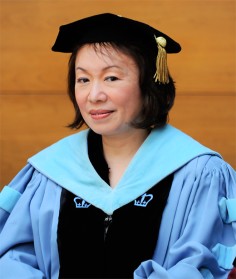
Then, in her Queens home, where the government said she'd forced scholarship students to clean and cook, she turned on the gas in the kitchen, slit her wrists and, when the desired result didn't come quickly enough, tossed a stereo cord over the ladder to the attic and hanged herself. The notes, carefully written in Chinese, were found at the scene. One was to her only son: "I love you," she wrote, and she apologised to him. Another, addressed to the judge and jury, with a politeness she maintained till the end, thanked them for their time and attention. The third, the most elaborate, she addressed to her employer, for whom she reserved her fury. She'd been a fundraiser at St John's for three decades, bringing in millions of dollars. And in the end, she felt the school had abandoned her. In her note, she described herself as a scapegoat.
Chang was fantastically corrupt, there can be no doubt. The details of her fraud are outlandish, grotesque. She charged her bookie's daughter's wedding to the university, disguising the roughly US$14,000 expense as a business charge; she had St John's pay almost US$58,000 for her son's law-school tuition, plus textbooks and lunches. But Chang was something more than a simple con artist, deceiving her employers for personal gain. She was deeply embedded in the institution - she'd built herself a nest and had feathered it well, while taking elaborate care of those around her. She seems to have been sincere - if deluded - in her belief that she'd earned the life she'd built. Over the years, she was the university's second-most successful fundraiser - only president Father Donald Harrington ranked above her. She may have raised close to the US$20 million she claimed - although in the final few years, when her fraud was at its height, she spent as much as she took in, or even more.
Some of that spending went to feather other nests, too. She was a doting mother - she gave her son a credit card, then billed everything from his ski holidays to his Big Macs to the university. She was a good friend, showing her love through ostentatious gifts - the children of friends got St John's scholarships. But it was her superiors who received some of the most lavish rewards. She spent tens of thousands of dollars on Father Harrington and tens of thousands more on his chief of staff, Rob Wile. Wile had a credit card on Chang's account, and in five years, according to credit-card statements, he charged roughly US$45,000 to it - including at Prada, Lanvin and Ferragamo - even during the period when he was signing off on Chang's expenses. The gifts to Father Harrington included suits from the finest Hong Kong tailors, a watch from Patek Philippe, cases of expensive wine and a Caribbean holiday, some of which Chang coyly suggested were underwritten by unnamed "friends of the university", though, in fact, they were billed to St John's itself, concealed as legitimate business expenses. "She took care of everyone that she met," says one investigator. "Everyone that she needed."
In Chang's mind, according to her testimony, her methods and extravagant, university-funded lifestyle were accepted, if unacknowledged, as the way she did business. Chang operated her own completely independent fiefdom within the university, one with its own set of rules - she rarely even set foot on campus. Officials didn't question that. Nor did they insist on identifying the supposedly generous "friends" underwriting their expensive perks.
Then when her fraud surfaced in late 2009, those same officials appeared shocked.
"For 30 years, they all turned a blind eye, and nobody knew anything," says one of her lawyers, Stephen Mahler. Chang put it more succinctly in her testimony: "They should know."