Chinese dissident novelist Ma Jian on the Cultural Revolution, challenging China and finding a place to call home
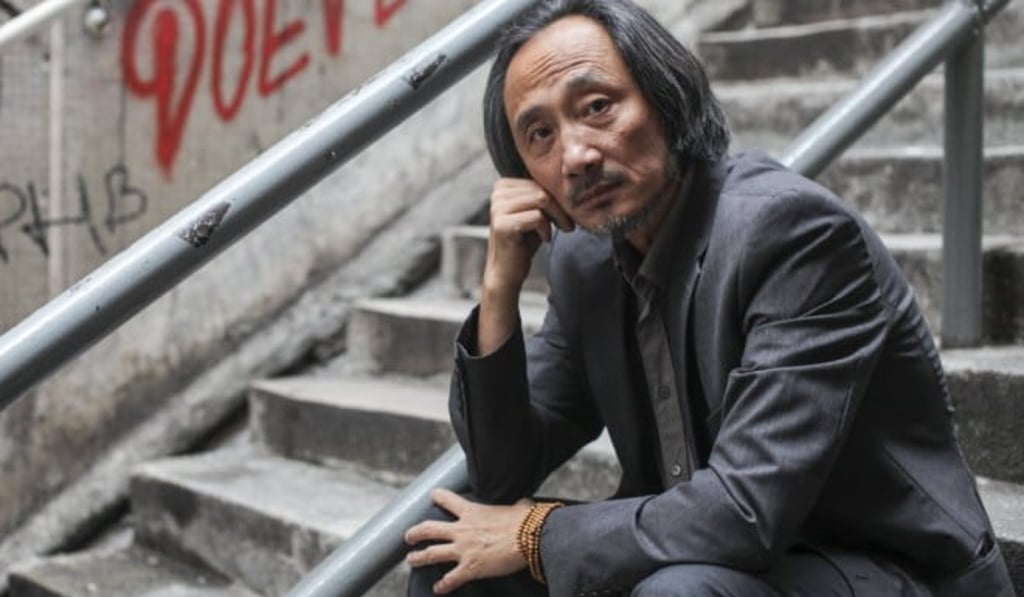
Now exiled to Britain, the author recalls causing trouble in China, living on Lamma and only being able to write honestly about his homeland because he no longer lives there
H Growing up in Qingdao, Shandong province, I was often hungry. I went to school on an empty stomach and, walk-ing on the road, I would look for seeds, a piece of bread - anything I could eat. When I was seven, a vegetable cart passed through the market and 100 people rushed towards it, trying to get the fallen vegetables. I saw something hit the ground and reached for it, but the cart crushed my hand. I still have the scar. Years later, I learned many people starved to death in the great famine of 1960.
My art teacher liked me and kept me after class to teach me to draw. One day he took me to a park to draw and said, 'When people ask you who taught you how to draw, you must tell them it was Lu Xiangyun.' But when the Cultural Revolution happened, he was persecuted as a rightist and I was the first to criticise him, saying he was a painter and bourgeois. We grabbed his paintings, sketches and books and burned them. I thought I was free - there were no teachers to control me. We would criticise and beat "bad" teachers.
We had no idea about the world; we only knew about other communist countries: Cuba, Albania and North Korea. I heard classical music on the radio; it was beautiful, but I didn't know what it was. I was 17 and beginning to think seriously about the world beyond China. It was difficult to get hold of books then, but I found Russian literature at the recycling station. I realised my art teacher was a good man and started to go to the countryside to draw.
Towards the end of the Cultural Revolution, there was a fight between two groups of students and someone was killed on each side. One of the students, Lu Zhongjian, was caught and executed. I saw him gagged with wire, but that didn't stop him from shouting, "Glory to Chairman Mao!" His mouth was bleeding. His legs were shaking as he was shot three times. I remember this well because, two years later, I met Lu's girlfriend. I didn't know it at the time; it was only after we had married that she told me. I was curious about what happened to Lu after his execution. A friend knew someone at the medical school in Qingdao and we went there. There were bodies in a big tub of formaldehyde. I rolled one over; it was Lu.
I painted every day and began writing short stories. In 1979, I went to Beijing with my wife, Guo Yanping, and young daughter. I got a job as a photographer for a candle company, creating their advertising. For one ad, I took a photo of a half-naked woman, in bed, holding a candle. The film developer saw it and reported me to the police. I think it was the first photograph of a nearly nude woman in modern China. My wife divorced me. I felt sorry for the model; she lost her job.