Who are you, Mr Loo?
Admired abroad and loathed at home, little was known about this secretive, cunning Chinese art dealer until a surprising find was made in 2006, writes Kate Whitehead
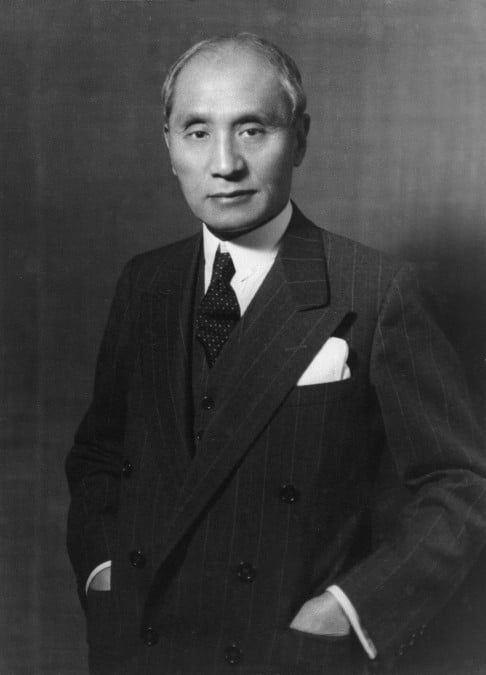
Arguably the most important art dealer of the mid-20th century, C.T. Loo is revered in America and Europe but loathed in China. He introduced the West to China's art but in the process looted the country of its finest works. Until recently, little was known about this wheeler-dealer beyond his most prominent achievements.
A secretive and cunning man with a genuine passion for Chinese art and love of his country, Loo was a womaniser with a complicated personal life. His road to professional success and the details of his romantic life we now know thanks to the painstaking research of Geraldine Lenain.

Working as an Asian art expert in the French capital, she was familiar with the name C.T. (Ching Tsai) Loo. He enabled many of the world's most prestigious museums and galleries to acquire exceptional pieces of Chinese art - the imposing 5.8-metre Sui stone sculpture in the British Museum was presented by Loo, and he helped the University of Pennsylvania, in the United States, secure its magnificent Tang-dynasty limestone statue. But unlike other leading art dealers, there existed no biography of this man, and no serious research had been done into who he was and what motivated him.
In 2006, Lenain received an intriguing phone call. A man claiming to be Loo's grandson asked her to meet him at the Pagoda Paris.
Most Parisians are familiar with the pagoda - walk through the 8th district of the city and you can't miss it. Adjacent to Parc Monceau, the original building was remodelled in 1928 to look like a classic Chinese pagoda and painted red. Lenain was aware that Loo, who died in 1957, had been behind the iconic building and that it had served as his gallery and sometime home, but she had no idea it still belonged to his family. Assuming the caller wanted to show her a work of art - a ceramic or perhaps a painting - she turned up at the pagoda, where she was ushered up to the first floor.