Chinese collectors' passion for Picasso skews global art market
Pablo Picasso has become the Louis Vuitton of the Chinese art world, as collectors pay sky rocketing sums for the 20th-century icon's louder, later works, writes Patrick Lecomte

If the art market is any indication of tastes, the millions of dollars spent by Chinese collectors on Pablo Picasso's paintings stand as a beacon that marks the love affair China is having with the 20th-century Spanish painter.
At a Christie's auction in New York in 2013, Dalian Wanda Group, a real estate and entertainment conglomerate, bought a Picasso painting from 1950 titled Claude et Paloma for US$28.2 million. It had been estimated the work would sell for between US$9 million and US$12 million. Following the sale, Guo Qiangxiang, who is in charge of the company's art collection, told the media: "This painting is Picasso's masterpiece, completed in his prime, so to pay US$28.2 million for the artwork … I think that it's decently priced, and I'm very satisfied with it."
The purchase is one of many examples of the growing interest of increasingly sophisticated Chinese art lovers in the artist, who died in 1973, aged 91. So, what is it about Picasso that gets the Chinese excited?
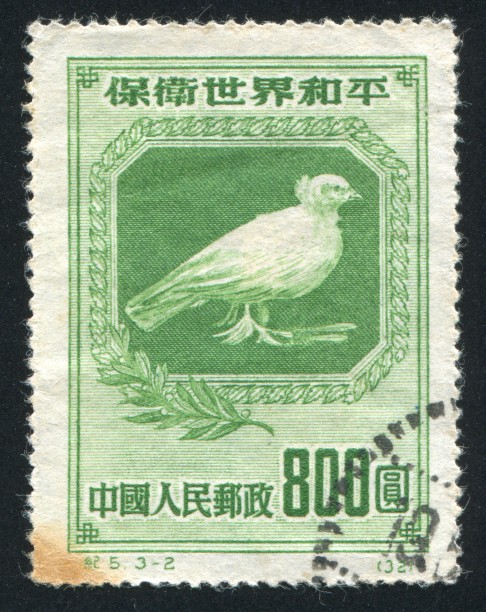
The first Picasso artwork to publicly reach the mainland's shores was of a bird - a pigeon, often portrayed as a dove, that graced postage stamps issued by the People's Republic of China in August 1950. Two years later, a couple of Picasso's doves were exhibited behind the praesidium of the Asian and Pacific Peace Conference, held in Beijing. By then, through personal friendships - French communist writer Louis Aragon used one of Picasso's pigeons to illustrate the World Congress of Advocates of Peace in Paris, in 1949 - and international politics - because the artist identified himself as a communist his work was embraced by red leaders - the artist's birds had become a highly popular part of cold war iconography. They would become familiar motifs at National Day parades in Tiananmen Square.
However, Picasso wasn't to truly "arrive" in China until 1996, when, following the initiation of Deng Xiaoping's open-door policy, two German collectors and art patrons, Peter Ludwig and his wife, Irene, donated 89 paintings worth US$27 million to the China National Museum of Fine Arts, in Beijing. The donation included three paintings and one ink drawing by Picasso, notably works from the painter's last period (1960s-70s), which was characterised by large-format and colourful paintings of quirky musketeers and naked female figures.