Advertisement
PostMag
Life.Culture.Discovery.
MagazinesPostMag
Lisa Lim

Language Matters | Winter solstice in China is a time for family, harmony and lavish meals

The shortest day of the year – or longest night – is celebrated with dishes symbolising togetherness

Reading Time:2 minutes
Why you can trust SCMP
Three generations of a Hong Kong family gather for a meal to celebrate the winter solstice in 1988.

Many in the northern hemisphere will today – December 22 – observe the winter solstice. The word solstice comes via Old French from the Latin solstitium, from sol (“sun”) and stit- (“stopped; stationary”). This astronomical phenomenon of the shortest period of daylight, or the longest night of the year, when one hemisphere is tilted farthest away from the sun, is marked by observances and festivals in cultures around the world.

In East Asia, 冬至 (dōngzhì in Mandarin; dūngzi in Cantonese), meaning “the arrival of winter/winter’s extreme”, falls in the 11th lunar month (though it is a solar term) and is among the most significant festivals celebrated by the Chinese. A traditional saying has it that “winter solstice is more important than New Year”, and it has long been the time when farmers and fishermen prepare for colder months ahead.
Advertisement
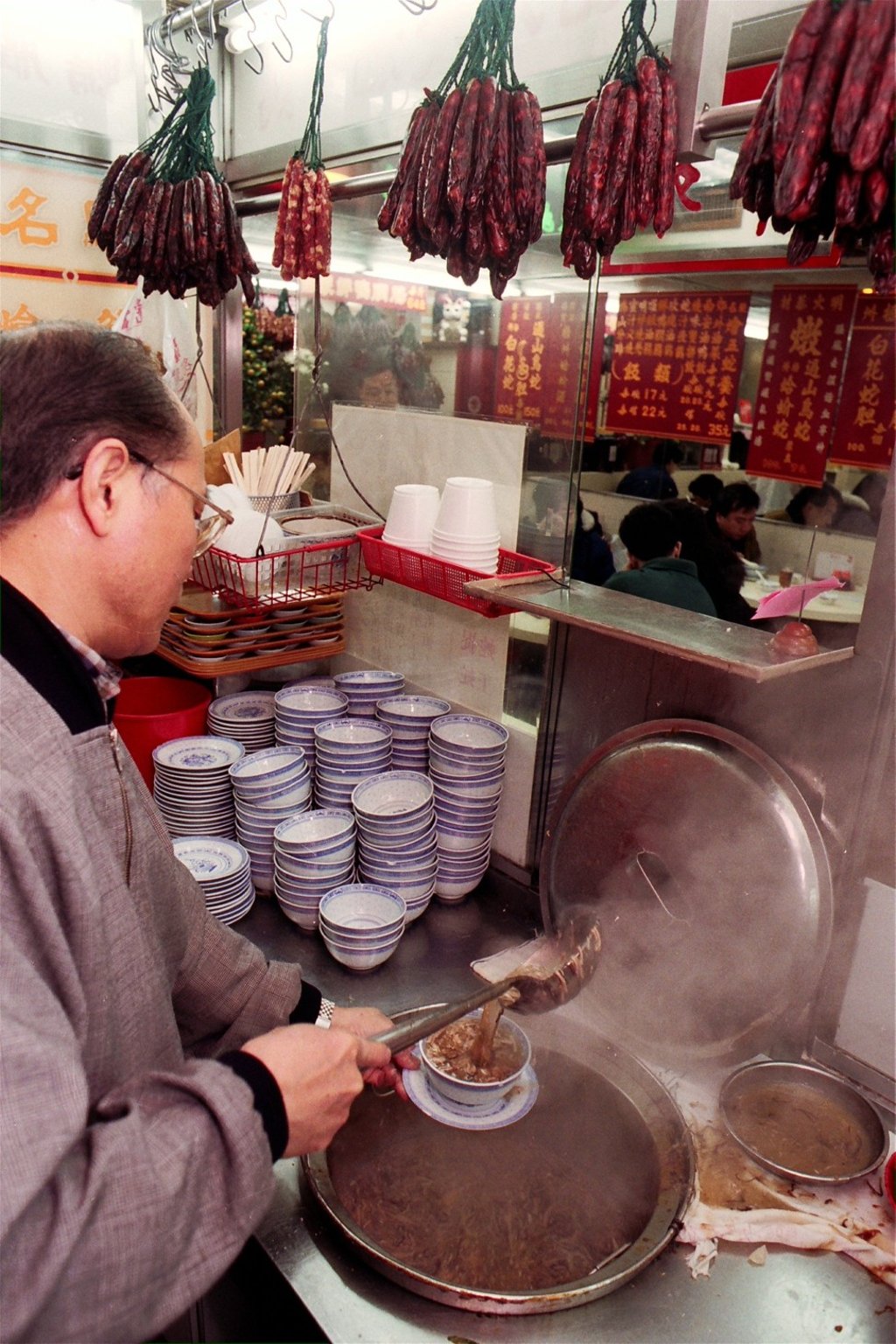
A vendor in Hong Kong prepares snake broth, a dish the Chinese serve in winter to cure coughs and sneezes, and keep the body warm. Picture: SCMP
In Hong Kong, people finish work early and head home for lavish family meals. Traditional dishes vary with the region: the north emphasises fare considered heat-y in traditional Chinese medicine, such as snake broths, because of their warming qualities, as well as dishes that ensure a resilient respiratory system, such as crocodile. One dish usually associated with southern China comprises glutinous rice flour balls quickly boiled in water and served in a warm, sugary and sometimes gingery syrup.
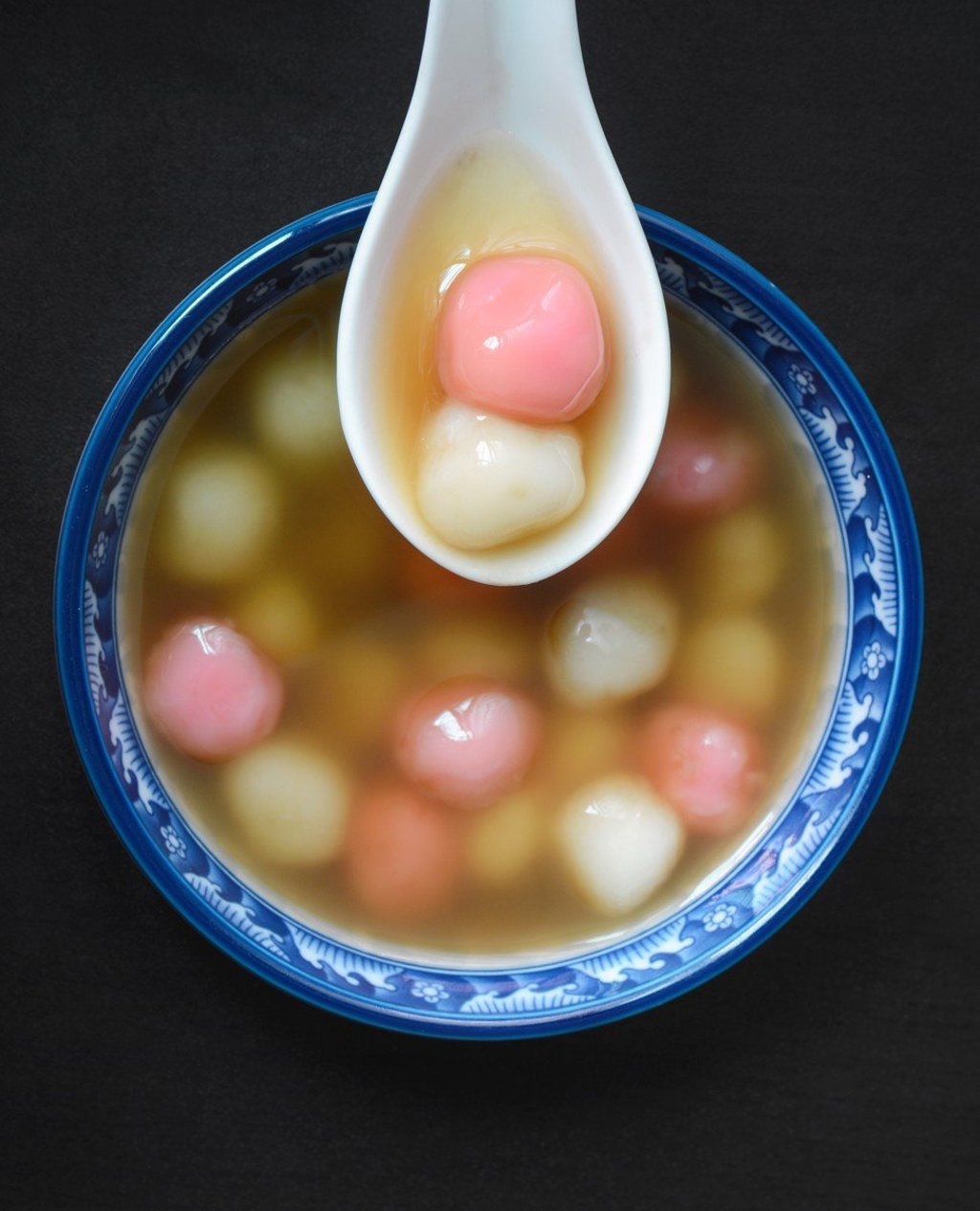
Sweet glutinous rice balls are served at winter solstice in southern China.
This dish demonstrates how Chinese cuisine often employs homophones – words with the same pronunciation but different meanings – to allude to good wishes or desired qualities. The characteristic winter solstice dish 湯圓, pronounced tōngjyùn in Cantonese and tāngyuán in Mandarin, and meaning “round balls in soup”, is homophonous with 團圓, meaning “reunion”, wholeness or unity. The round shape of the balls and the bowls in which they are served have also come to symbolise family togetherness.
Advertisement
Advertisement
Select Voice
Choose your listening speed
Get through articles 2x faster
1.25x
250 WPM
Slow
Average
Fast
1.25x