ReflectionsAncient Chinese understood the importance of honouring agreements
Malaysia’s unilateral decision to scrap the Kuala Lumpur-Singapore rail project takes this Singaporean back to Mahathir Mohamad’s first premiership when relations between the two Southeast Asian countries were ‘fraught with difficulties’

Malaysia’s decision to scrap the US$25 billion Kuala Lumpur-Singapore rail project has left me disappointed. As a Singaporean with friends and family in peninsular Malaysia, travelling to Kuala Lumpur on a bullet train would have been much faster – just 90 minutes – than the five hours by road. It would probably have been even quicker than a direct flight, if one considers the amount of time one must spend waiting in airports and negotiating the distances and traffic between airports and city centres.
Another concern is Malaysia’s unilateral abrogation of the agreement, which has a familiar ring to it.During Malaysian Prime Minister Mahathir Mohamad’s first premiership (1981-2003), relations between the two countries were fraught with difficulties. Several bilateral agreements were re-examined and questioned by Mahathir, causing anxiety among Singaporeans.
Then, as now, Mahathir’s actions were necessitated by domestic interests (the high-speed rail project was cancelled as part of efforts to reduce national debt, though agreements made with China remain unaffected at time of writing). Still, they did not sit well with many Singaporeans, whom detractors have criticised as having an unbending attitude towards the sacrosanctity of contracts, especially those that are to our advantage. Singapore will be compensated for the breach of contract this time, Mahathir has said.
The ancient Chinese understood the importance of agreements, which they entered into through formal and informal means, such as written contracts, blood oaths, verbal promises and physical gestures such as clapping the other person’s palm with one’s own.
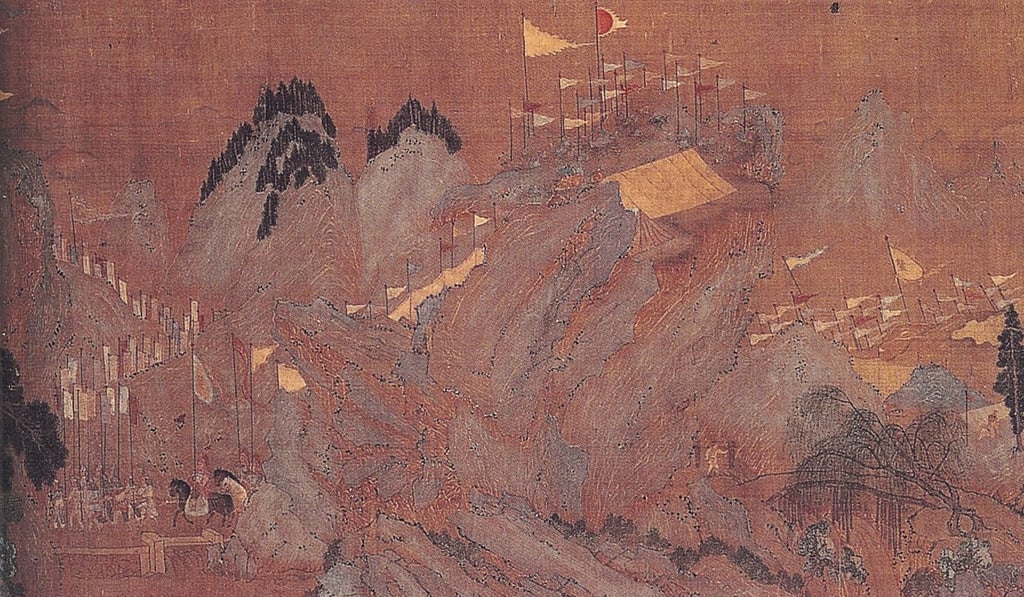
In 207BC, when Liu Bang and his army approached the imperial capital, Xianyang, in the Guanzhong region, Ziying, the last Qin ruler, surrendered, marking the end of the short-lived dynasty that had unified China.