Review | The first opium war: the corruption, mistakes and misfortunes at the root of Sino-British conflict
Interspersed with interesting titbits, historian Stephen R. Platt’s book is an enjoyable read that aims to dispel the myths surrounding the combat

Imperial Twilight: The Opium War and the End of China’s Last Golden Age
by Stephen R. Platt
Knopf
Many important historical events seem inevitable in retrospect. When placed in a narrative, there is the sense of them being moved – or at least precipitated – by greater forces.
Other episodes are blundered into and the consequences take on their own logic. The first opium war (1839-42) between Britain and China, suggests historian Stephen R. Platt, is one such instance.
Subsequent events – the “century of humiliation”, the rise of Hong Kong, the Boxer rebellion and the founding of the People’s Republic – cast dark shadows over the opium war, but only in retrospect, as a harbinger of China’s opening to foreign trade and its inability to resist incursions on its sovereignty and territory.
Platt’s new book aims to dispel the myths surrounding the conflict, presenting its events as the result of doubt, misapprehension and mistakes made by the central figures involved.
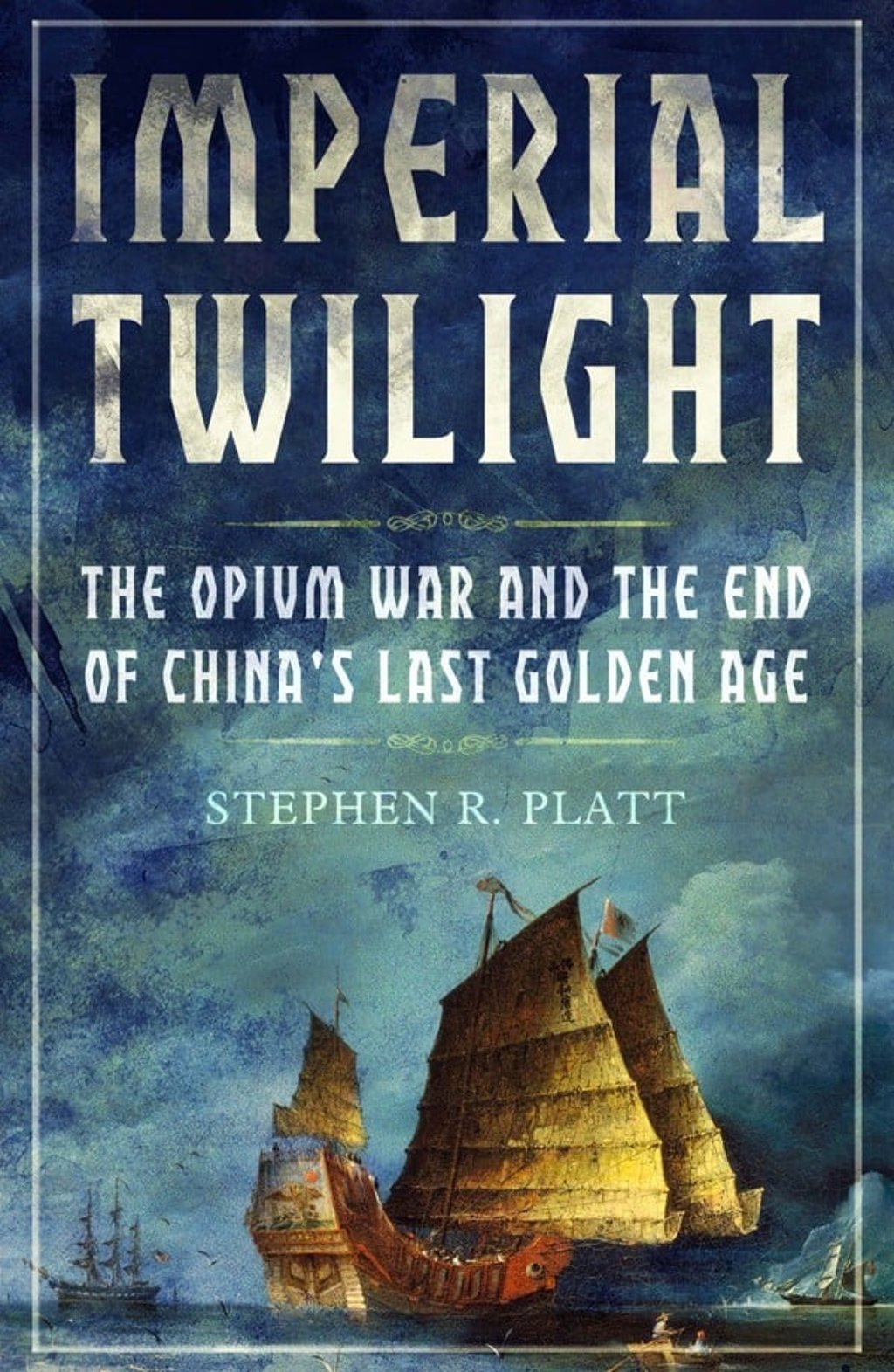
Imperial Twilight is a fast-paced narrative of trade, exploration, diplomatic disputes and early cultural interaction. The story of British efforts to enter China is fascinating and richly described.
First came Lord Macartney, sent to China in 1792 on Britain’s earliest diplomatic and trade mission, and received with famous disdain by Emperor Qianlong, who announced: “The products of our empire are abundant, and there is nothing we do not have.”