Conservationist 'Flip' Stander on hunting with lions in Namibia's deserts
The Namibia-born, Cambridge-educated conservation expert has been tracking the desert lions of Namibia for 35 years. He talks about how he has built a relationship with the big cats and why he doesn’t sleep at night

BORN FREE I was born and grew up in the southern part of Namibia – my family was in farming and agriculture. As a young boy I got a job as a hand catching wildlife, primarily the mass capture of antelope. An uncle was involved in the business and my school holidays were spent working with the game capture. It was a dramatic job – it was with a helicopter and chasing animals into a capture and making sure they didn’t get injured, then loading them onto special trucks and driving them to their new home and releasing them. It exposed me to the wildlife trade.
ETOSHA HERE I COME An opportunity arose for a job in Etosha National Park – one of the biggest national parks in Africa and by far the biggest and most significant conservation area in Namibia – for an assistant ranger and I jumped at it. It was the first time I’d been involved in real conservation. There was a project on lions initiated by their chief scientist. They required observations and, as rangers, we would be out in the field doing our work and whenever we encountered lions we’d record the data. I brought in a lot of good information. The scientist made an arrangement that I could be seconded to the research section as an assistant. To begin with I was just following instructions and feeding information through to the scientist, but very soon it became clear I could do more and I was given some freedom to initiate my own ideas.
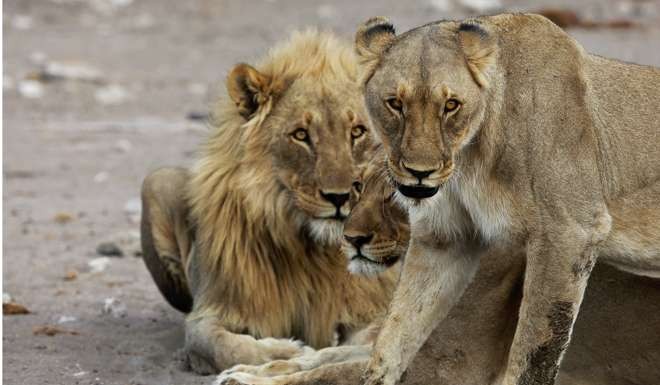
NIGHT VISION I was really interested in hunting behaviour. The studies suggested that the lions were responsible for the decline in the wildebeest population in Etosha and the top management of the conservation group wanted to start culling the lions, but having been in the field I didn’t think that was the full picture. At that time, all the work was done in the day and people were always back in the camp by night. But the lions were active at night, so I got permission to work at night in the park. I figured out how to work with special binoculars and red lights so you don’t disturb things and I started following these prides at night, going for extended periods, following them for 14 nights in a row. I’d follow them in the Land Rover at night and then sleep in the day. It was an incredible experience and it changed me. I’ve now been doing that for 35 years – I don’t sleep well at night now, it’s always a struggle, like people doing night shifts, but it’s a fantastic thing, another world. Your senses become more adapted to it. There are a few tricks you do to be more effective at night – you allow your pupils to dilate by having no lights on. In my vehicle there are no internal lights. I follow lions through areas of no vegetation using no lights and only these facilities and once you are there you are in their world and that’s a fantastic thing. And now lions are actively hunting using the cover of dark. There is so much energy, I get so excited. They just ignore me and I can be in among them.
TEAM LION I found that the lions were killing mainly springbok, which are small antelope that they would consume in the night, leaving no evidence. With the larger animals, like wildebeest, there would be remains or they would be lying on the corpse and that’s why people assumed they were killing only wildebeest. I made another big discovery about the way they hunted. I knew the individual lions by name – they had a number, but I’d also give them a name based on their personality – and every hunt I would draw a map: where I was, where the prey was, where the hunt was. I realised they were hunting in a cooperative manner with individuals occupying the same role repeatedly, synonymous to football or rugby. That means conscious decision-making between mammals that is not something that’s accepted broadly and that got the scientific community excited.