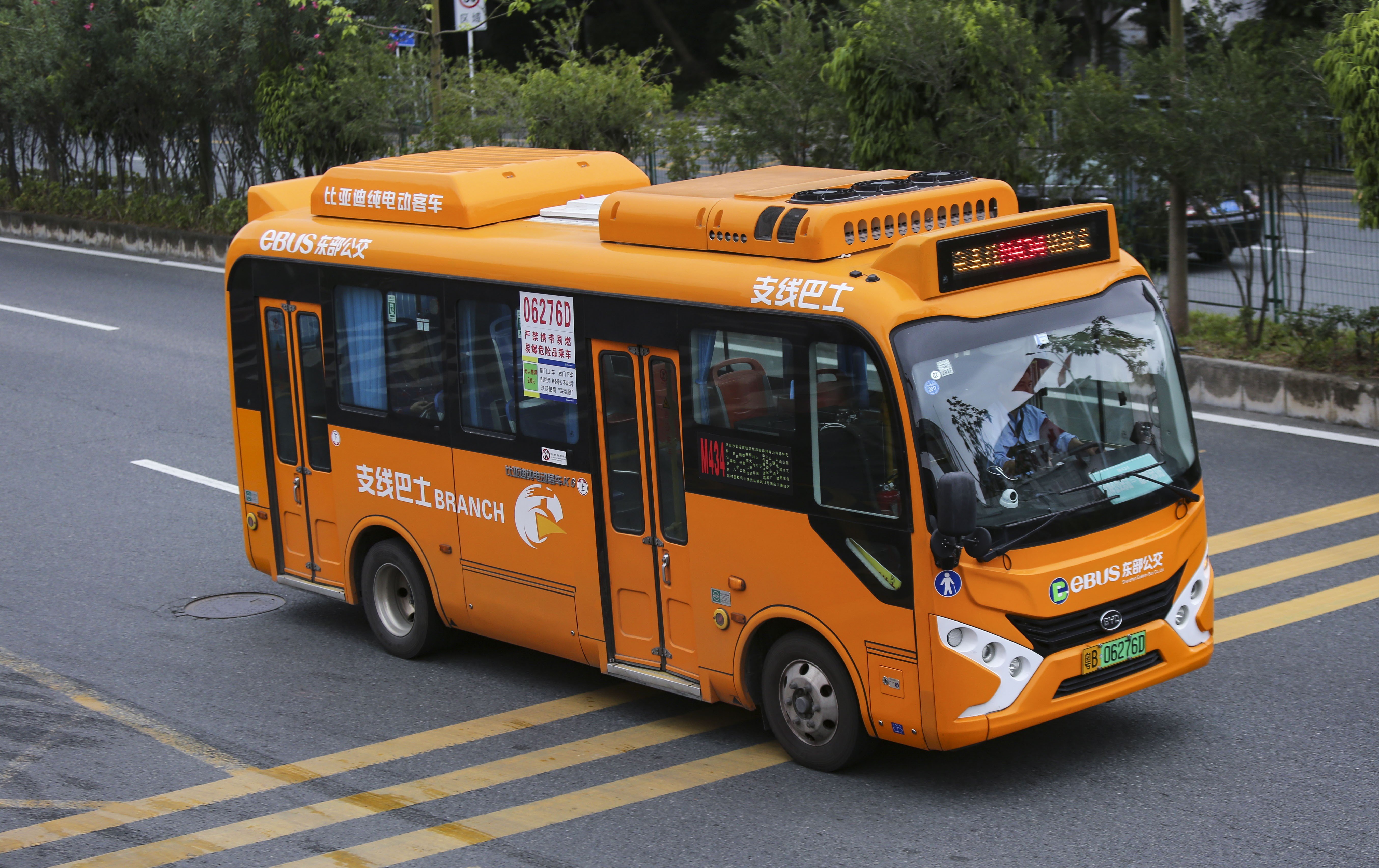
Shenzhen set to have world's first all-electric public bus fleet
Massive subsidies helped catalyse the shift from diesel in the pollution-choked southern Chinese city

A cloud of diesel fumes envelops us as a bus pulls away from a stop on Dongzong Road, in Shenzhen’s Pingshan district. Nothing unusual about that, you may think – we are in one of the most polluted countries in the world, after all – but we are unlucky enough to be standing behind one of very few buses in the city that still run on diesel.
More than 14,000 electric buses ply the roads of Shenzhen and the several hundred remaining diesels are due to be phased out by the end of 2017. This puts Shenzhen ahead of not only Beijing, Hangzhou and Nanjing, but also Paris, Oslo and London, and will earn the city the distinction of becoming the first in the world to have an all-electric public bus fleet.
Although China is not alone in embracing electric vehicles in pursuit of a cleaner urban environment – France and Britain will end sales of petrol and diesel cars from 2040 and Norway has set its target at 2025 – the country’s need is seen as all the more urgent because it has the world’s deadliest air pollution, according to the World Health Organisation, and is the largest emitter of greenhouse gases.
Vehicles in China emitted 44.7 million tonnes of pollutants in 2016, according to the Ministry of Environmental Protection, and going electric is seen as a fix. The power needed to drive an electric vehicle must still be generated, of course, but one major advantage of moving pollution from the exhaust pipe to the power plant is that it takes pollutants farther away from the general population, lowering the adverse health effects. Concentrated emissions are also easier to manage.