Fukushima heroes on both sides of the Pacific still fighting effects of radiation, stress and guilt
Following the catastrophic earthquake and tsunami of 2011, selfless Japanese workers battled nuclear-reactor meltdown, and thousands of US troops provided disaster relief. Today, many are counting the cost to their mental and physical health

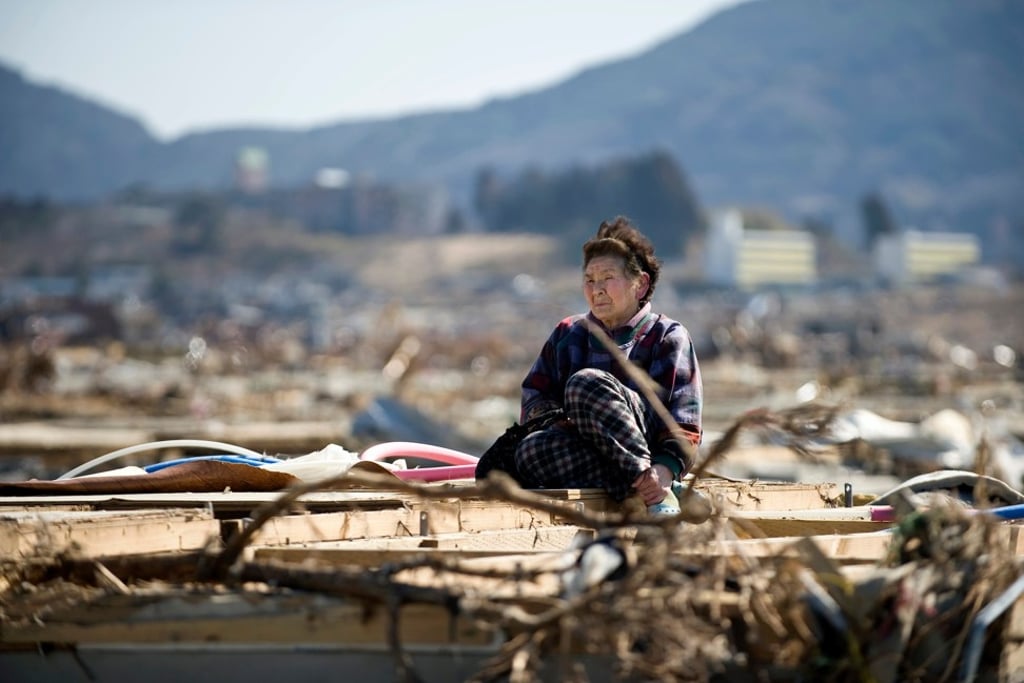
Christmas Day saw dozens of masked men descend on Futaba, in the northeast of Japan’s main island of Honshu. They moved deliberately along deserted streets, clearing triffid-like undergrowth and preparing to demolish derelict buildings. Their arrival marked the beginning of an estimated four-year government-led project to clean up Futaba, which has succumbed to nature since its residents deserted almost seven years ago.
Despite 96 per cent of Futaba still being officially designated as uninhabitable due to high radiation levels, the government has set spring 2022 as the return date for its 6,000 or so residents. That the government has also built a 1,600-hectare facility to store up to 22 million cubic metres of nuclear waste in the town has led to doubts that many will return.
“I find it difficult to believe anyone would want to go back,” says Ryuta Idogawa, 33, a former employee at Fukushima Daiichi operator Tokyo Electric Power Co (Tepco), and one of the so-called “Fukushima 50” – a hardcore of station workers who remained on-site after 750 others had been evacuated, battling to bring the melting reactors under control at great risk to their own safety.
“They say time heals,” Idogawa adds, “but that depends how deep the wounds are.”
On the other side of the world, members of a different and larger group of people than the Fukushima 50 are suffering health problems, ostensibly as a result of the disaster. For more than seven weeks following the catastrophe, the United States mounted a massive disaster relief mission, dubbed Operation Tomodachi (the Japanese word means “friend”). The initiative directly or indirectly involved 24,000 US service personnel, 189 aircraft and 24 naval ships, at a total cost US$90 million.
While the mission was lauded a success by the US and Japanese governments, during Operation Tomodachi, thousands of US sailors were inadvertently exposed to a plume of radiation that passed over their ships, which were anchored off the Pacific coast of Japan. Since then, several hundred have developed life-changing illnesses, such as degenerative diseases, tumours and leukaemia, and defects have been detected in foetuses of some pregnant women. All are a result, they claim, of being irradiated by the plume.