Advertisement
Advertisement
Advertisement
Celebrities

David LaChapelle walked away from the world of celebrities to be a farmer

STORYLee Wing-SzeVivian Chen
Lady Gaga - Life Alert (2009), chromogenic print by David LaChapelle. Photos: David LaChapelle . Thorsten Wulff.
Fashion

The photographer decided that he had said everything he could about the fashion and entertainment world and bought a plot of land in Hawaii

Photographing glamorous celebrities was, for 25 years, all in a day’s work for American David LaChapelle. One day, he walked away from Lady Gaga, Michael Jackson, Leonardo DiCaprio, Katy Perry, Kanye West, David Bowie, Hillary Clinton and Muhammad Ali – to be a farmer. But that was not his destiny.
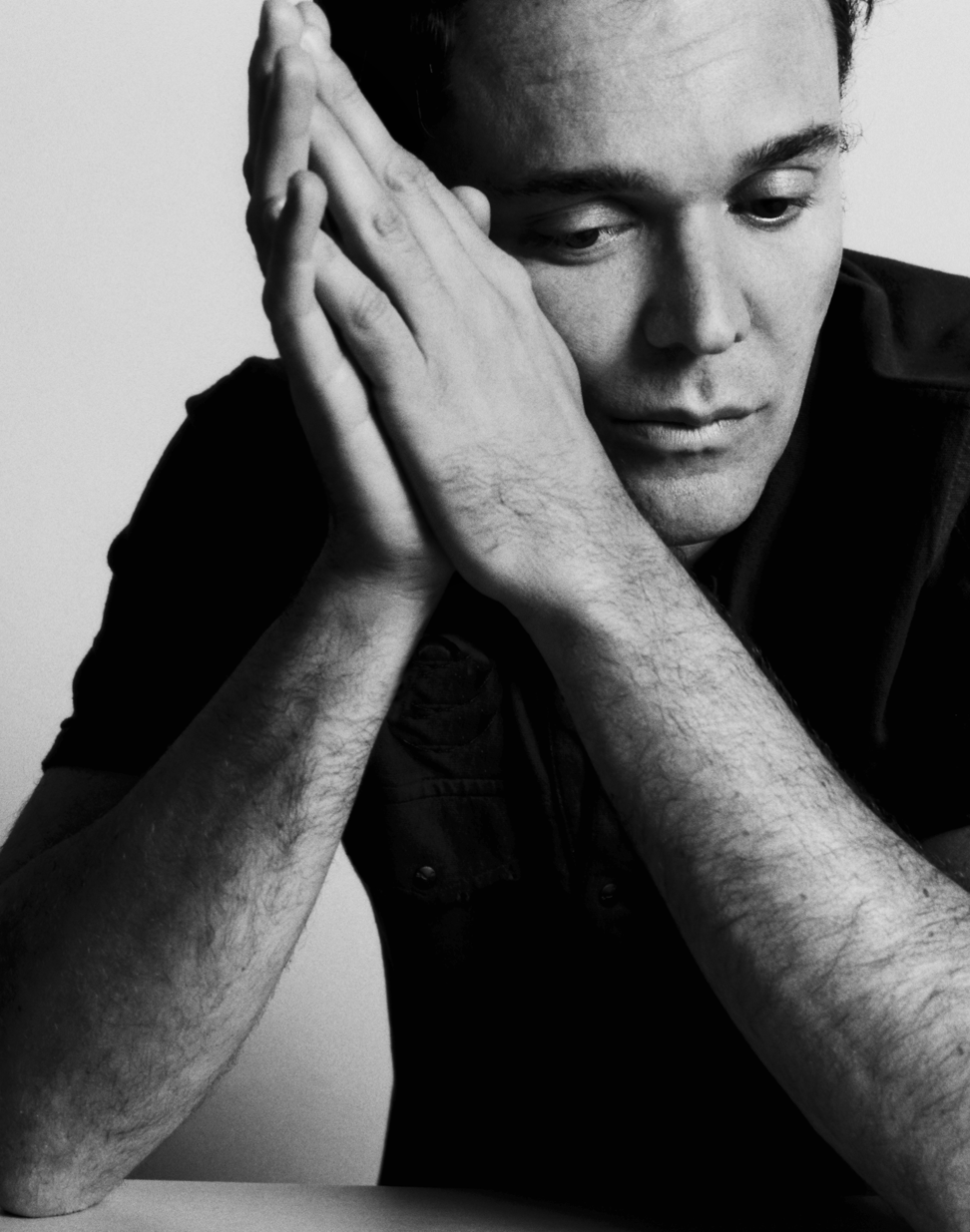
Returning to the publishing industry as a fine art photographer, he was in Shanghai last September to take pictures at the celebration event of shopping mall Plaza 66.“I haven’t done that since I was a kid,” he says.
American photographer David LaChapelle.

This time, he was photographing an event for fun. In the old days, it was something he did to make ends meet before pop art legend Andy Warhol hired him as a photographer for pop culture magazine Interview after seeing his work at a gallery in New York City’s East Village.
Advertisement
“Do whatever you want. Just make everybody look good,” was the only instruction the 17-year-old received at the outset from his “art hero” Warhol. LaChapelle soon established himself as a fashion and celebrity photographer with a distinctive style – conceptual, provocative, dramatic, surreal and somewhat dreamlike. While showing the beautiful clothes and people, he takes the images to another level by adding unusual aspects and social context.
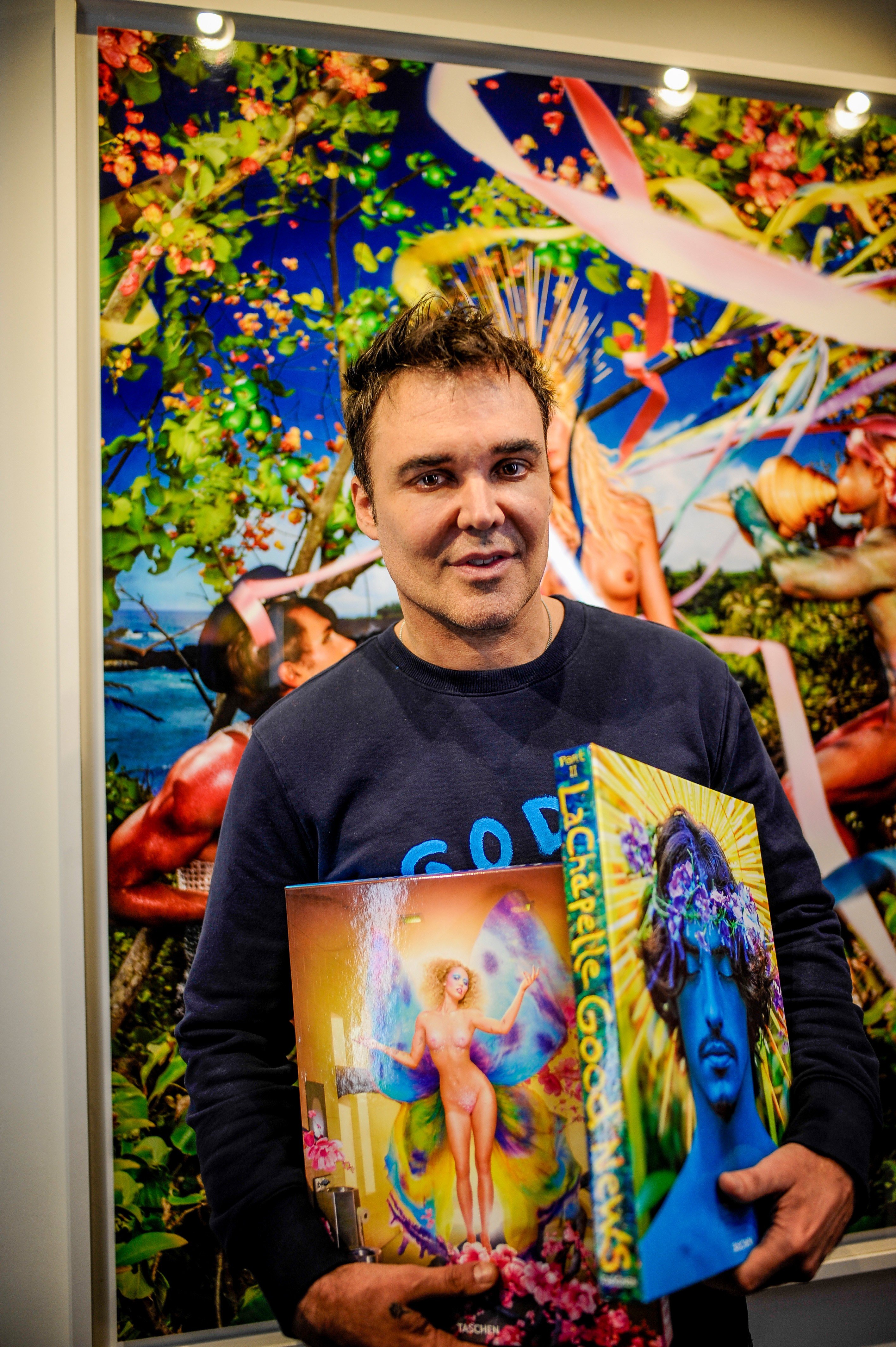
American photographer David LaChapelle with his two final books, Lost + Found, Part I and Good News, Part II. Photo credit: Thorsten Wulff
At the peak of his career in 2006, LaChapelle felt that “I’d said everything I needed to say in that world”. After the Destruction and Disaster series – images showing glamorously dressed models against chaotic and ruined backdrops – for Vogue, he suddenly quit, bought an isolated plot of land on Maui, Hawaii, and turned to farming.
David LaChapelle's new book Lost + Found, Part I, published by Taschen. Photo: Taschen

“I wasn’t burnt out as some magazines have said,” LaChapelle recalls. “I felt like I’d said all I could say in that context. I wanted to try a different life, which was farming on this tropical island. I don’t want to do something just for the money or for the wrong reasons, so I stopped at the very top of that world and walked away.”

Back in the ’90s and early 2000s, LaChapelle’s works could be found on the covers and fashion editorials of Vanity Fair , Vogue Italia , Vogue Paris , i-D, The Face , GQ and The New York Times , and he directed music videos for Mariah Carey, Elton John and No Doubt (which included Gwen Stefani), and made documentaries Krumped (2004) and Rize (2005).

I don’t want to do something just for the money or for the wrong reasons, so I stopped at the very top of that world and walked away
David LaChapelle
This was also when LaChapelle said no to, and hung up on, pop queen Madonna. “I had seen people come and go in New York City since I was a kid,” he says. “I’d have to thank [Madonna] for that because that was the first time I said no ... I loved photography but I fell out of love with it.”
Inside David LaChapelle's Lost + Found, Part I published by Taschen. Photo: Taschen
Select Voice
Select Speed
1.00x