Investors are pumping hundreds of millions into a technology that could revolutionise the way we eat

Vertical farm Plenty attracted US$200 million funding – making it the largest agriculture-tech funding round in history
Instead of growing greens outdoors, the farm grows its food on glowing, LED-lit six-metre-tall towers inside a former electronics distribution centre in South San Francisco. The towers don’t require pesticides or even natural sunlight.
The technique is called indoor vertical farming, a type of agriculture in which food grows on trays or hanging modules in a climate-controlled, indoor facility. The process could one day upend the world of agriculture, because it means certain types of food could be produced year round, anywhere, in a small space. Produce could be delivered to consumers within hours of harvest.
Plenty, founded in 2014, claims to grow up to 350 times more greens than conventional farms of similar size, while using much less water and land. The goal, Plenty CEO Matt Barnard says, is to revolutionise the way the world grows food – and sell that food for lower prices than typical produce.
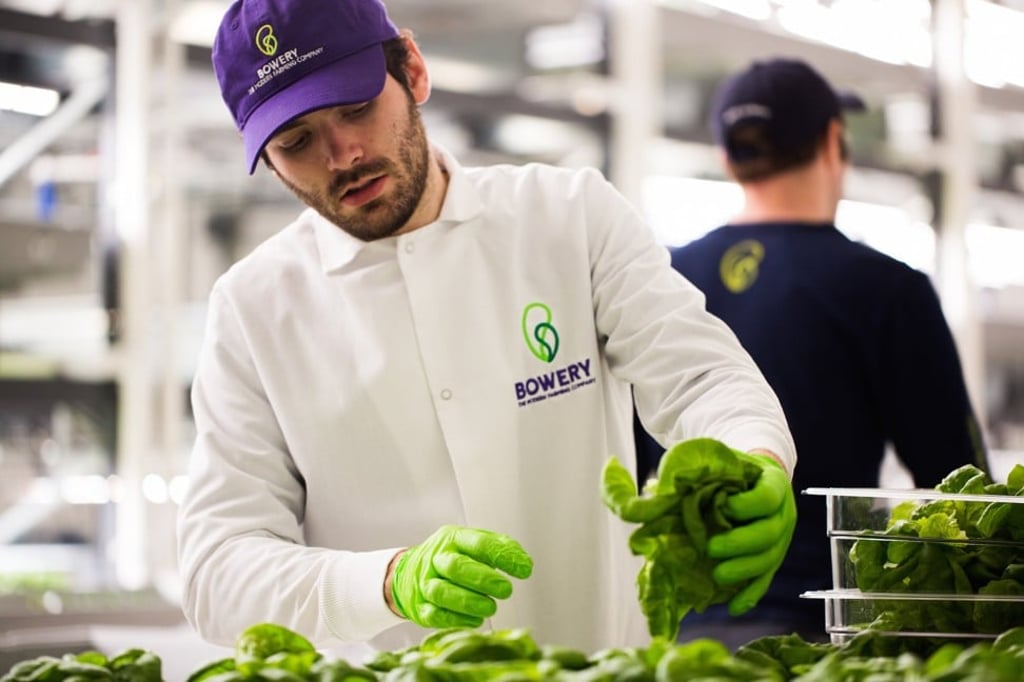
A US$200 million investment in the startup could help make that vision viable.
Announcedin mid-July, the Series B funding round was led by SoftBank Vision Fund and included DCM Ventures as well as funds that invest on behalf of Alphabet’s Eric Schmidt and Amazon’s Jeff Bezos. With the new investment, Barnard says Plenty plans to build more farms around the world.
“By building out our global farm network, we’ll be able to deliver amazing produce to communities within hours of harvest.”
Some experts say the funding could help the indoor farming industry as a whole. Dickson Despommier, a professor of microbiology and public health at Columbia University, says the investment will make indoor agriculture even more commonplace, and encourage other VCs to fund vertical farm companies.

“I think that most cities now accept urban agriculture as normal, so the hurdles are mostly with marketing and the consumers who are unfamiliar with the kinds of produce that vertical farms can make available 24-7: leafy greens, root vegetables, berry fruits, and the like,” he says.
Kimbal Musk, co-founder of restaurant chain The Kitchen and vertical farm incubator Square Roots, predicts that more consumers will look for locally grown produce, which could also help the indoor farming industry.