Out of control: Experts fear emissions from Indonesian fires could have ripple effect on atmosphere of the entire planet
El Niño is a critical factor in exacerbating Indonesian fires, because it tends to deprive the islands of needed rains and drive drought conditions.

Experts say that along with dramatic global coral bleaching, thousands of fires across Indonesia represents the next sign of an intensifying global El Niño event. And the consequences, in this case, could affect the entire globe’s atmosphere.
That’s because a large number of Indonesia’s currently raging fires are consuming ancient stores of carbon-rich peat, which is found in wetlands featuring organic layers full of dead and partially decomposed plant life.
Fire emissions are already higher than Germany’s total CO2 emissions
This year, the very smoky peat burning has been simply massive – the fires are estimated to have caused US$14 billion in damage so far, and are causing hazardous air conditions in much of the area, including nearby Singapore. Millions of people have been affected, and 120,000 have sought medical treatment for respiratory illnesses, according to Weather Underground’s Jeff Masters.
Indeed, the 2015 Indonesian fire season has so far featured a stunning 94,192 fires. That’s more Indonesian fires than at the same time in 2006, a banner year both for fires and also for their carbon emissions to the atmosphere.
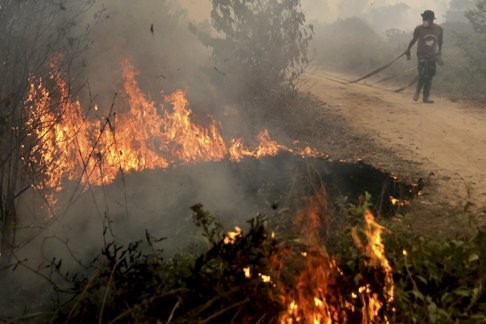
Those emissions are more than large enough to have global consequences. Indeed, according to recent calculations by Guido van der Werf, a researcher at VU University Amsterdam in the Netherlands who keeps a database that tracks the global emissions from wildfires, this year’s Indonesian fires had given off an estimated 995 million metric tons of carbon dioxide equivalent emissions as of October 14. That’s just shy of a billion metric tons, or a gigaton.