Advertisement
Political crisis in South Korea leaves ‘comfort women’ deal in limbo
Reading Time:4 minutes
Why you can trust SCMP

The power vacuum in South Korea created by the impeachment of President Park Geun-hye in December has made it difficult for Seoul to implement some of her major policy decisions and a landmark agreement with Japan on so-called comfort women is no exception.
The impasse over the 2015 agreement on women forced into wartime Japanese brothels comes as North Korea appears to be making headway in its missile and nuclear weapons programmes, a development that requires closer security coordination with Japan and the United States, especially as President Donald Trump has vowed to deal with Pyongyang “very strongly” over its nuclear ambitions.
But in a sign of abnormality in bilateral relations, Japanese ambassador to South Korea Yasumasa Nagamine has yet to return to Seoul after being recalled January 9 in protest over the erection by civic groups in December of a statue symbolising comfort women in front of the Japanese Consulate in Busan.
Advertisement
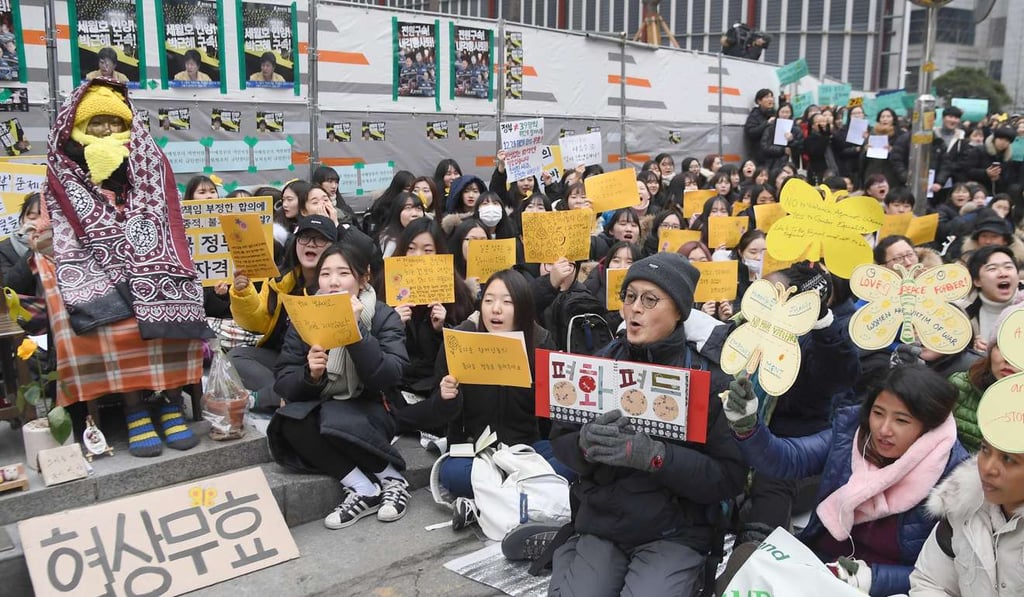
The installation – and the South Korean government’s failure to stop it – went against the spirit of the accord to “finally and irreversibly” resolve a protracted dispute over the comfort women issue.
Advertisement
During a meeting Friday in the western German city of Bonn, Japanese Foreign Minister Fumio Kishida demanded that the statue be removed and said “nothing has been decided” about the timing of sending Nagamine back to Seoul. South Korean Foreign Minister Yun Byung Se said Seoul will make “maximum efforts” to implement the comfort women agreement.
Advertisement
Select Voice
Choose your listening speed
Get through articles 2x faster
1.25x
250 WPM
Slow
Average
Fast
1.25x