How ‘baby box’ set up by South Korean church makes it easier for parents to abandon their unwanted newborns
New arrivals – almost 200 last year, an average of nearly four a week – are deposited covered in blood, wrapped in material, sometimes with the umbilical cord still attached.

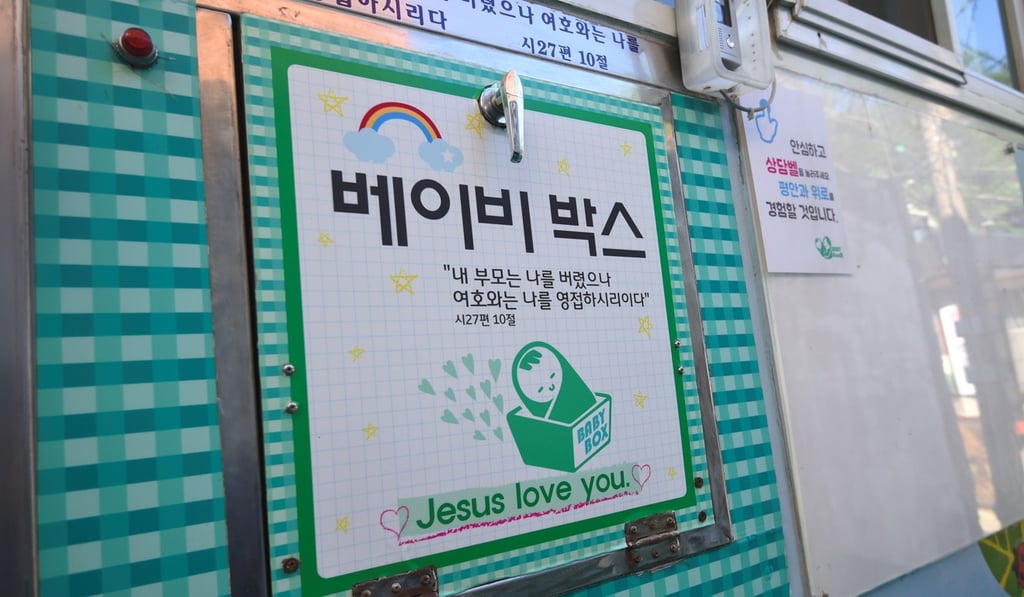
The young woman labours up the steps, past brightly decorated walls akin to a child’s nursery, her daughter in her arms. Opening a hatch in the wall, she puts her inside, turns around and walks away.
She runs her hands over her head but does not look back, surveillance camera footage shows. She may never see the girl again.
South Korea has risen from the ruins of war to become Asia’s fourth-largest economy and a member of the OECD club of developed countries.
It was for a time one of the world’s biggest sources of unwanted children, driven by poverty, a light regulatory touch, and a culture of racial purity, family bloodlines, and shame.
About 110,000 South Koreans have been adopted to the US alone since the 1950s but numbers have fallen in recent years.
Birth rates have plummeted to the world’s lowest with factors such as high child-rearing costs and a workaholic culture affecting the situation. But the number of abandoned babies has jumped in recent years in the wake of a law intended to protect children.