Are North Korean quakes signs of instability at nuclear test site?

A series of tremors and landslides near North Korea’s nuclear test base may mean the country’s sixth and largest blast has destabilised the region and the Punggye-ri nuclear site may not be used for much longer to test nuclear weapons, experts say.
A small quake was detected early on Friday near the North’s nuclear test site, South Korea’s weather agency said, but unlike quakes associated with nuclear tests, it did not appear to be man-made. The tremor was the latest in a string of at least three shocks to be observed since Pyongyang’s September 3 nuclear test, which caused a 6.3 magnitude earthquake.
Friday’s quake was magnitude 2.7 at a depth of 3km in North Hamgyong Province, the Korea Meteorological Administration said. The United States Geological Survey measured the quake at 2.9 magnitude and depth of 5km.
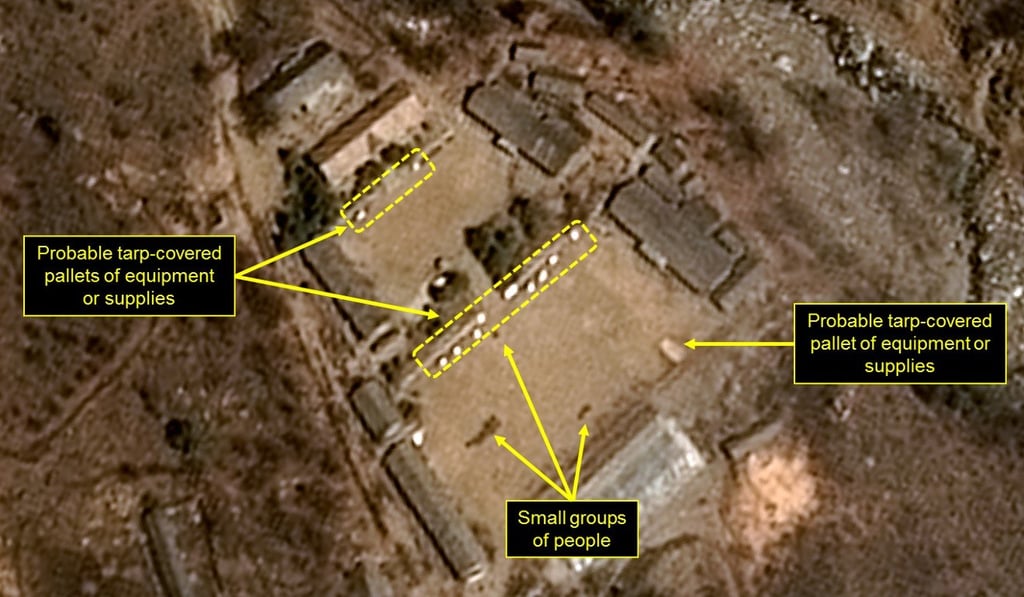
The series of quakes has prompted experts and observers to suspect the last test – which the North claimed was a hydrogen bomb – may have damaged the mountainous location in the northwest tip of the country, where all six of North Korea’s nuclear tests were conducted.
“The explosion from the September 3 test had such power that the existing tunnels within the underground testing site might have caved in,” said Kim So-gu, head researcher at the Korea Seismological Institute.