Thailand's first psychiatric hospital turns 250
As Thon Buri - Thailand’s first mental health hospital - celebrates its 250th anniversary this year, Pichaya Svasti charts the historical footprints of Thailand’s “red roof”

By Pichaya Svasti
For over a century, Thais have been familiar with the slang term “langkha daeng”, meaning “red roof”. If someone says, “go to langkha daeng”, it mockingly or cruelly means, “you’re crazy, just go to an insane asylum”, because Thailand’s first psychiatric hospital had its roof painted red. This colloquial phrase is used so widely that a Thai movie about the lives of the mentally disturbed was named Langkha Daeng and became a big hit in 1987.
However, first-time visitors to “Langkha Daeng” -- officially Somdet Chaopraya Institute of Psychiatry in Klong San district, Thon Buri -- are often surprised by its peaceful ambience and shade offered by big trees. Instead of gloom, it’s a site of beauty and tranquillity. Its buildings and compound also tell the history and development of psychiatric care in Thailand.
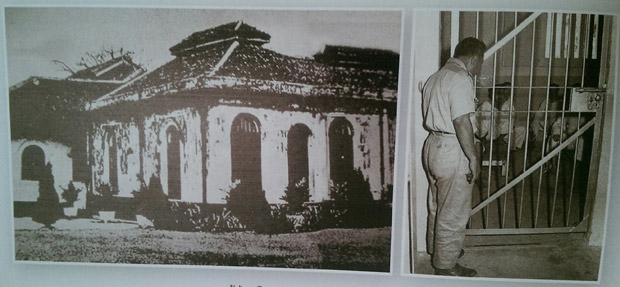
Somdet Chaopraya Institute of Psychiatry was the first psychiatric hospital in the Kingdom, founded by King Rama V on Nov 1, 1889, under the name “Insane Asylum” (Rong Payabal Khon Sia Jarit). Its birth was inspired by King Rama V’s visit to a lunatic asylum in Singapore during his royal visits to Java and Singapore in 1870. Located at Pak Klong San, the asylum provided medical treatment for patients by physicians and Thai traditional physicians.
“It was one of the first four hospitals in Thailand: Siriraj Hospital, established in 1888; a hospital in front of Burapha Palace; one beside Wat Debsirin; and the asylum which was originally located across the street where the residence of Chinese tycoon Keng Sua had been,” Dr Sanjai Saengwichian, a retired Siriraj Hospital physician and historian, said during a tour organised as part of the celebration of Thon Buri’s 250th anniversary.