50 years after Tet Offensive, Vietnamese remember life underground in tunnel network
The Vinh Moc tunnels are among thousands of underground passageways built across Vietnam throughout the war, including the massive Cu Chi tunnels in Saigon, where Viet Cong guerillas took shelter

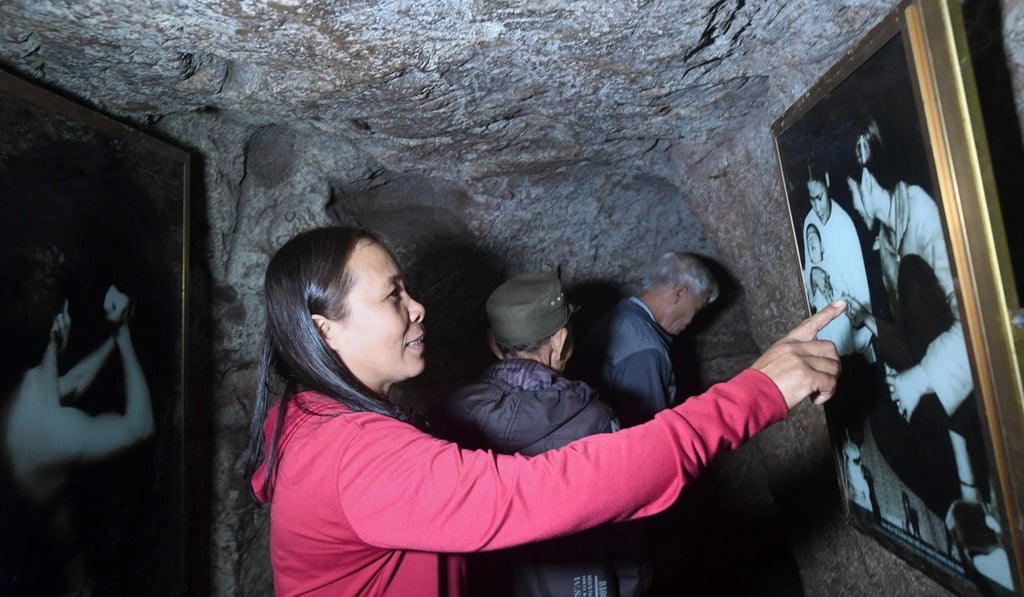
American bombs rained overhead as Ho Thi Giu was born in an underground tunnel on January 1, 1968, where hundreds of Vietnamese villagers carved out subterranean lives to escape the bloodshed of the country’s brutal civil war.
Saltwater sloshed underfoot as her mother gave birth in the tunnel network in the communist stronghold of coastal Quang Tri province, just north of the Demilitarised Zone that separated North and South Vietnam during the war.
Weeks later on the eve of the Tet Lunar New Year holiday – 50 years ago this month – North Vietnamese troops and Viet Cong guerillas launched sweeping attacks across southern Vietnam.
Known as the “Tet Offensive”, the surprise assault was a turning point in a war eventually won by the communist North. Yet fighting carried on for years before American troops finally withdrew.
During that time some villagers in Quang Tri took up arms against the US-backed south. But others stayed behind to build the elaborate Vinh Moc tunnel network – mostly by hand – as a refuge from the bombing.