
The real purpose of US Navy ‘freedom of navigation operations’ around disputed South China Sea islands
‘Fonops’ in South China Sea are Washington’s way of continuing to support the regional security architecture and the rules-based liberal international order

With days to go before Asian defence officials meet in Singapore for the annual Shangri-La Dialogue, the United States carried out its first South China Sea freedom of navigation operation (fonop) for the year. The guided missile destroyer USS Dewey sailed within 12 nautical miles of Mischief Reef in the Spratly Islands.
Not only was the operation the first for the year, it was the first carried out by the Trump administration – which had, until the operation, largely pushed the disputes in the South China Sea and US policy therein to the back burner. The Obama administration’s final fonop was in October, leaving a break of more than 200 days between both events.
China reacted predictably to the operation. The foreign ministry issued a statement noting that the US vessel entered “the adjacent waters” of Mischief Reef without the “permission of the Chinese government” (we’ll come back to why the precise phrasing here matters). The ministry reaffirmed China’s view that its sovereignty over nearly 90 per cent of the South China Sea was “indisputable”.
More seriously, however, on the same day as the USS Dewey’s fonop,two Chinese jet fighters conducted what the US Navy complained was an unsafe intercept of a P-3C Orion anti-submarine warfare aircraft. The US aircraft was intercepted near Hainan Island, presumably in a move designed by the People’s Liberation Army to assert Beijing’s sovereignty to the region. The intercept came just days after a similar incident over the East China Sea.
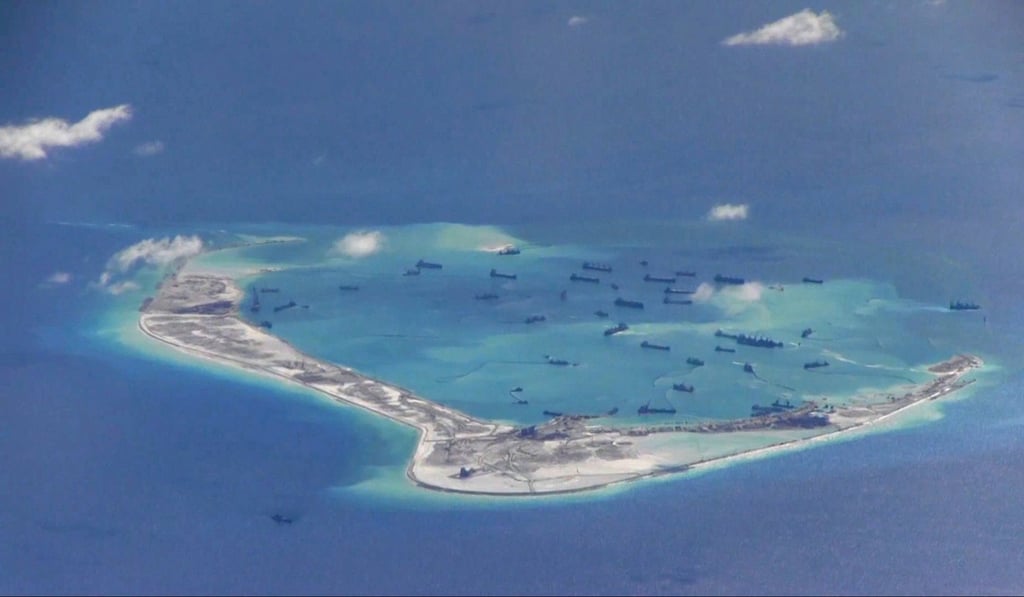
Under US President Donald Trump, the US-China relationship has been singularly focused on the North Korean issue in the security realm and, in the economic realm, on trade. The South China Sea drew some buzz during the presidential transition period in the US, with Trump himself tweeting about China’s construction of a “massive military complex” in the area and then-secretary of state nominee Rex Tillerson seemingly proposing a plan to deny China access to its occupied features in the area.