Exclusive | US spy planes kept eye on Chinese scientists during research expedition near Guam
The Kexue oceanographic ship had regular low flyovers from US Navy P3-Orion surveillance aircraft while investigating a seamount southeast of Guam

China’s most advanced research vessel recently spent nearly a month operating in the backyard of the largest US military base in Asia-Pacific waters “under the nose of US spy planes”, according to a marine scientist leading the expedition.
The Kexue oceanographic ship had regular low flyovers from US Navy P3-Orion surveillance aircraft while investigating a seamount southeast of Guam between August 5 and September 5, the researcher told the South China Morning Post
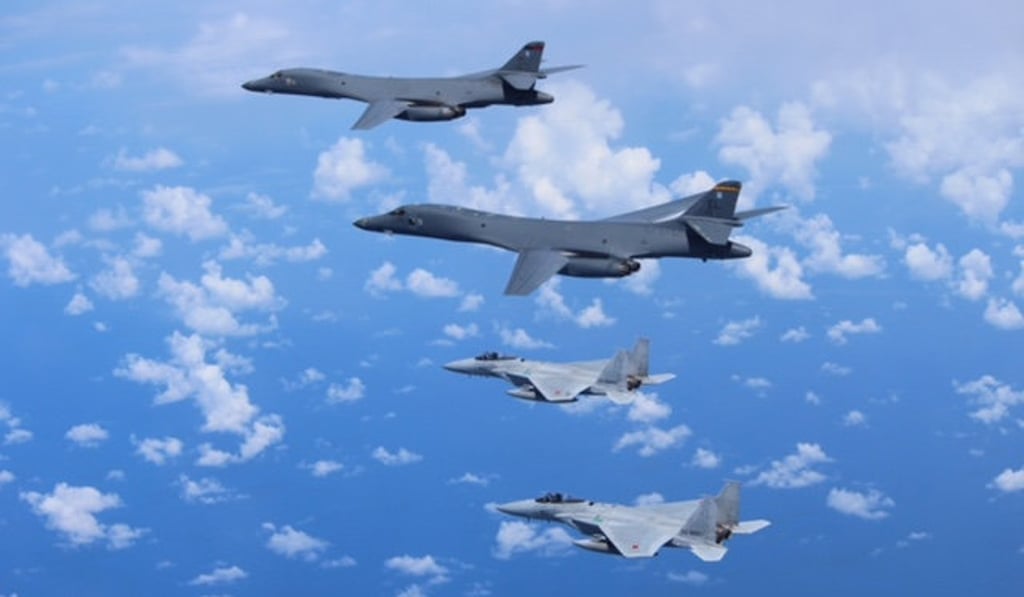
Guam is home port to the US’s fast-attack nuclear submarines that operate in the South China Sea and from the US naval base that is combined with Andersen Air Force Base. From this outpost, B-2 stealth bombers can quickly reach potential conflict areas such as the Korean Peninsula.
Xu Kuidong, a lead researcher with the mission who is affiliated with the Institute of Oceanology, Chinese Academy of Sciences in Qingdao, Shandong, said the scientists on board were “well aware” of the area’s sensitivity.
“It is all about the Second Island Chain,” he said, referring to a series of archipelagos that stretches from the eastern coast of Japan to the Bonin islands, to the Mariana islands, to Guam and the island country of Palau.
The US-controlled islands initially served as a second line of defence against communist countries in East Asia during the cold war. Today they are regarded as a major constraint on China’s rapidly expanding marine power and influence in the Pacific Ocean.