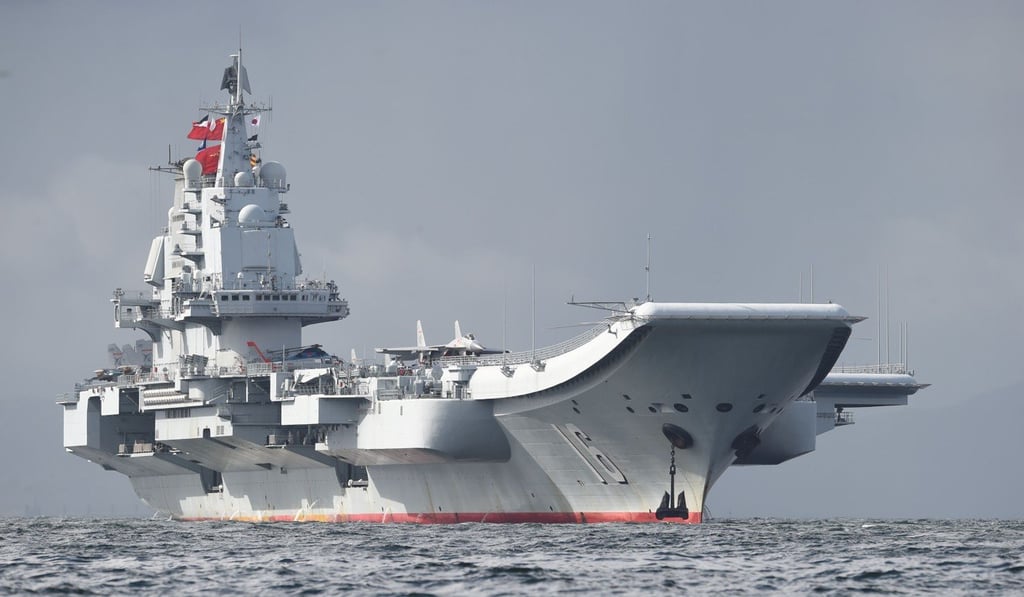
China’s aircraft carrier conundrum: hi-tech launch system for old, heavy fighter jets
PLA Navy’s J-15s, based on a Soviet design more than 30 years old, are world’s heaviest carrier-based fighters

China’s second home-grown aircraft carrier could be a world-class warship if it uses a domestically developed hi-tech launch system, but the hefty fighter jets it would have to launch remain a fly in the ointment for the country’s naval power aspirations.
While Beijing is narrowing the aircraft carrier technology gap with the United States, the country’s carrier programme is still hindered by the capabilities of its carrier-based warplanes.
China spent more than a decade developing its first carrier-based fighter, the J-15, based on a prototype of a fourth-generation Russian Sukhoi Su-33 twin-engined air superiority fighter – a design that is now more than 30 years old.
The J-15, with a maximum take-off weight of 33 tonnes, is the heaviest active carrier-based fighter jet in the world but the sole carrier-based fighter in the People’s Liberation Army Navy. Its weight is one of the key reasons military leaders have pushed for the use of an electromagnetic aircraft launch system (EMALS) on China’s third carrier, construction of which is expected to start next year, rather than steam-powered catapults, a military source told the South China Morning Post.