Opinion | Opinion: The future is now for China’s challenges and Xi Jinping’s ambitions
China’s president has set out an era-shaping agenda along economic, security and institutional arcs, Michael Kovrig writes

Chinese President Xi Jinping is on a roll. In October, the Communist Party he dominates used its national congress to accord him even more authority for his second term, embedding his core position and “thought” in its constitution.
The party’s Politburo is now stacked with Xi loyalists, and two important players on foreign policy, State Councillor “Tiger” Yang Jiechi and party doctrine-shaper Wang Huning, have been elevated to support their leader’s ambitious global agenda.
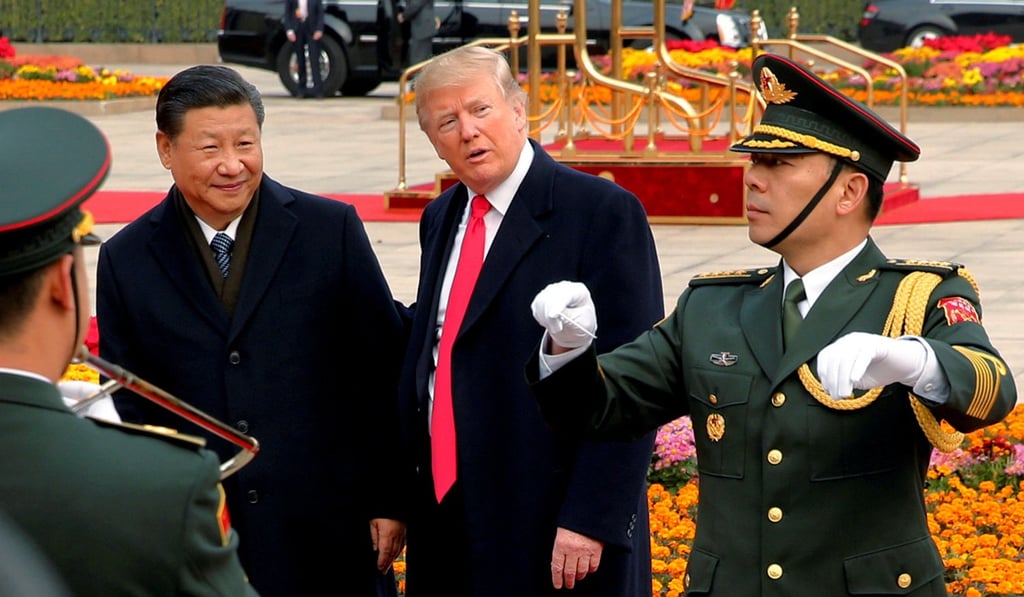
This month Xi powered serenely through a series of high-level diplomatic meetings, including a summit parley with US President Donald Trump. Despite all the attention it attracted, the US chief executive’s “state visit plus” was more about pageantry, managing risks and deflecting potential problems. More indicative of Xi’s plans was his speech at the Asia-Pacific Economic Cooperation summit in Vietnam, where he called for “profound change”, and visits to Vietnam and Laos on which he sought to warm and deepen relations.
Xi’s predecessors governed a relatively weak and inward-focused China. That shaped a policy of hiding strength and biding time, deferring thorny issues for future generations. For Xi, the future will come within the years in which he hopes to continue wielding power in some form.
Today’s China is an emerging great power, but it faces serious demographic, economic and environmental headwinds. That leaves a limited window of opportunity to realise Xi’s “Chinese dream” of national rejuvenation at home and “new era” of regional primacy and global influence.
These grand visions are often dismissed as abstractions, but they are better understood as calls to China’s massive bureaucracy to come up with concrete, incremental steps to realise them. When Xi speaks of a “community of shared future”, he is calling for a paradigm shift away from a balance of power in the Asia-Pacific region in which most countries look to the United States for security, and to China as the economic dynamo. With his predilection for control and centralisation, Xi wants to move the region towards an increasingly Sinocentric order.