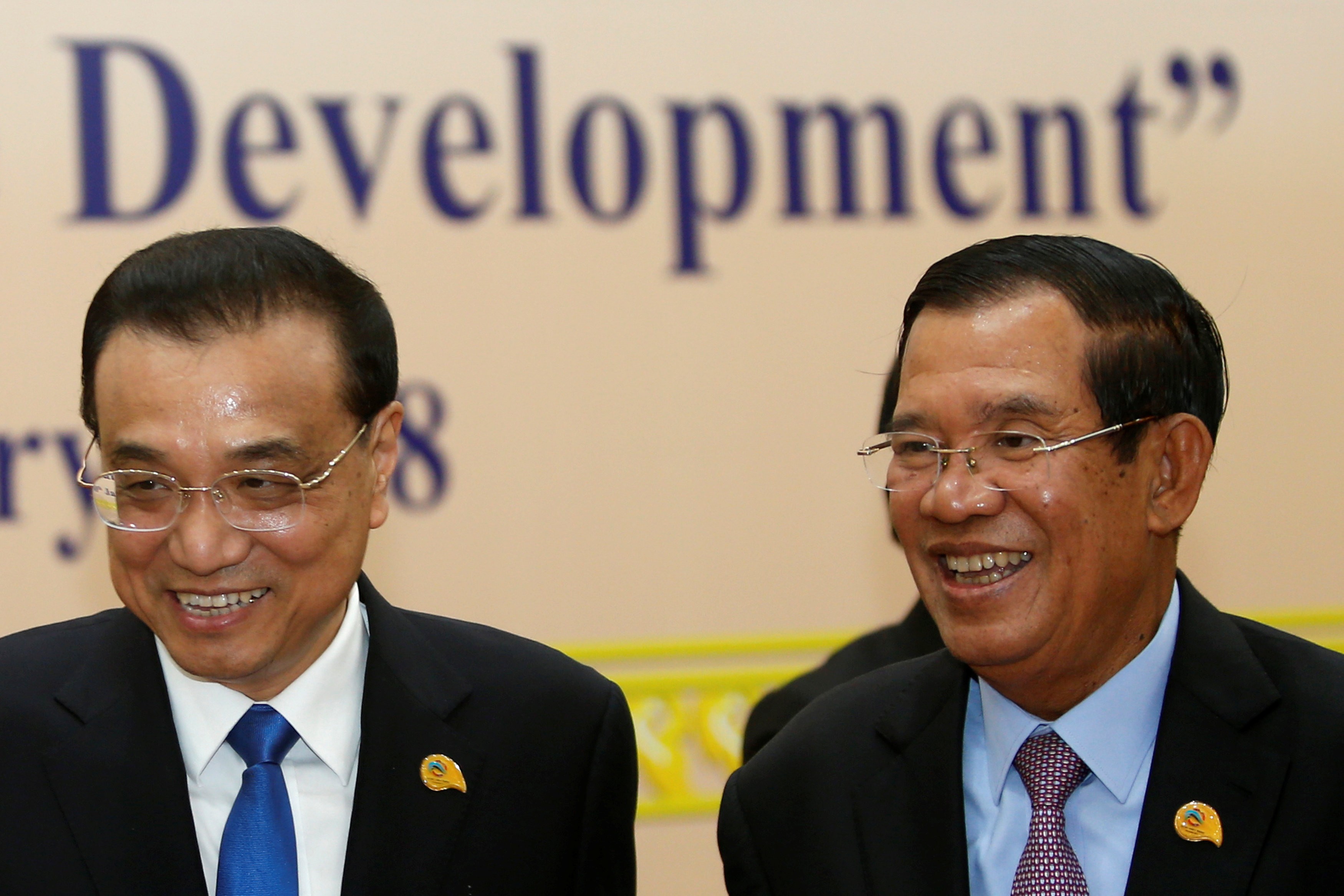
China pledges more investment in Cambodia, but is Phnom Penh selling itself short?
Observers consider what price the Southeast Asian nation might one day pay for Beijing’s support

Road signs and advertising boards in Phnom Penh were traditionally written in two languages: Khmer and English. But things are changing in Cambodia’s colourful capital.
Dotted around the city these days are signs, both literal and metaphorical, of China’s growing influence in one of Southeast Asia’s poorest nations.
In Phnom Penh on Thursday, Chinese Premier Li Keqiang signed 19 agreements worth billions of dollars to develop Cambodia’s infrastructure, agriculture and health system.
One of the largest deals involves the construction of a motorway running 200km (125 miles) from the capital to the resort city of Sihanoukville. Cambodia’s Minister for Public Works and Transport Sun Chanthol said China would invest about US$2 billion in the scheme.
Other projects, according to a statement issued by Cambodia’s foreign ministry, include a new airport for Phnom Penh, two electricity transmission schemes and a forestry centre for cultivating high-quality timber trees.