Beijing accuses ‘external powers’ of flexing muscles in South China Sea after US carrier docks in Vietnam
Arrival of ‘fully armed vessel’ in disputed waterway is ‘greatest disturbance to peace and stability’, Foreign Minister Wang Yi says

China’s foreign minister on Thursday took a veiled swipe at a US aircraft carrier’s highly symbolic visit to a Vietnamese port, saying “external powers” were showing off their military muscle and creating a great disturbance in the South China Sea region.
Speaking at a press conference in Beijing on the sidelines of the National People’s Congress – the annual session of the country’s ceremonial parliament – Wang Yi said also that China and the Association of Southeast Asian Nations planned to hold at least three rounds of talks on a code of conduct for handling disputes in the South China Sea, though he avoided answering a question on whether such a code would be legally binding.
The USS Carl Vinson arrived in Da Nang, Vietnam, on Monday, becoming the first aircraft carrier to dock in the country since the end of the Vietnam war in 1975. The visit was seen by some as a warning to Beijing over its military build-up in the region.
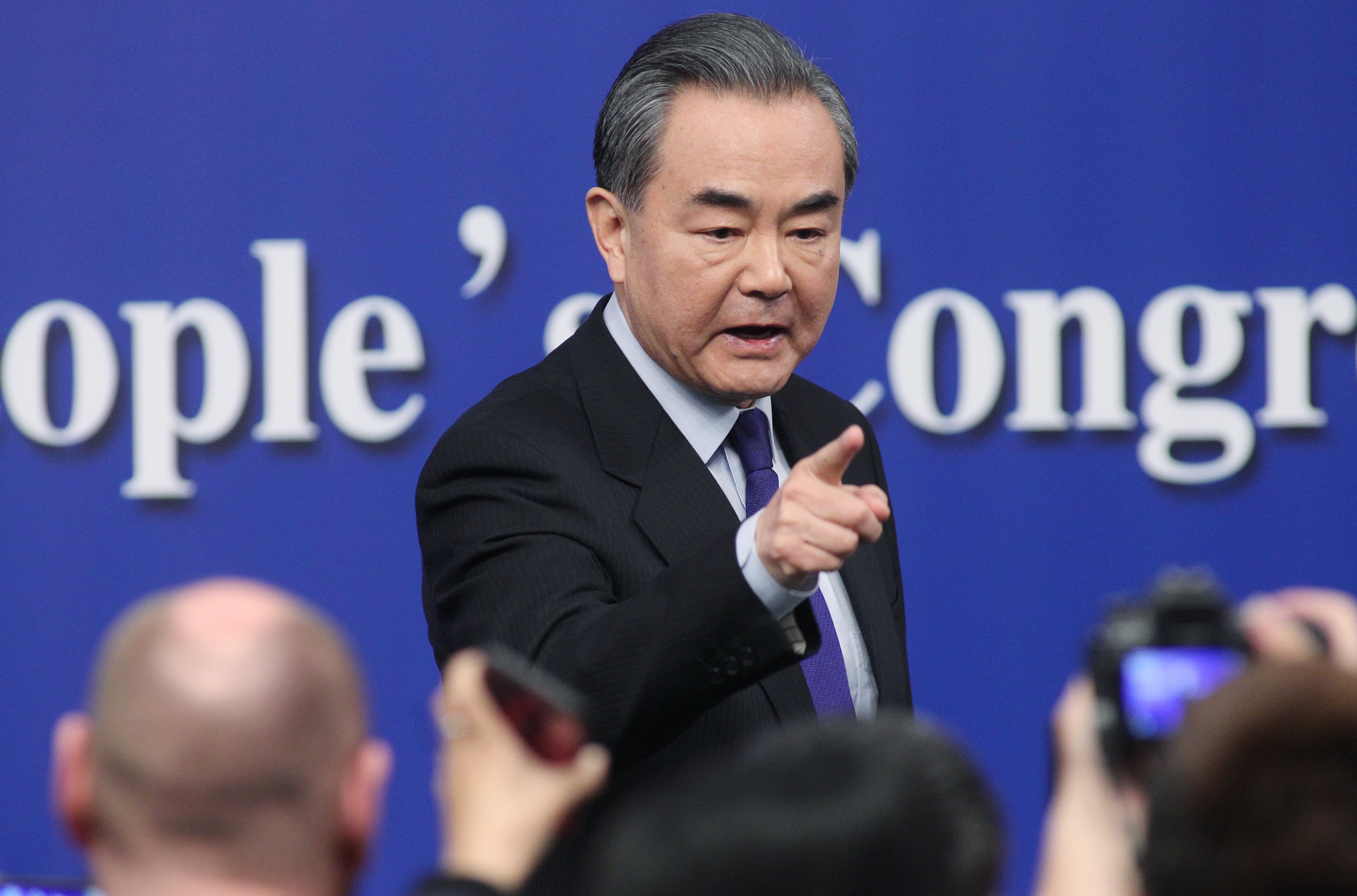
“Now the major challenge is that there are certain external powers who are unwilling to accept the stability in the South China Sea and always want to stir up trouble,” Wang said.