The Chinese airports snapping at Hong Kong’s heels
Increased demand is giving a boost to all five airports in Pearl River Delta region, but mainland hubs are growing more rapidly

There was joy in the streets of Foshan’s backwater Gaoming district in mid-April when Guangdong Communist Party secretary Hu Chunhua affirmed plans to build an airport there by 2022.
The new, 35 billion yuan (US$5.1 billion) Pearl River Delta regional airport, designed to handle 30 million passengers a year, will be a key piece in the province’s ambitious plan to have 31 big and small airports by 2030. It will join the delta’s five existing key air hubs – Hong Kong, Macau, Guangzhou, Shenzhen and Zhuhai – to serve a dynamic area that’s home 66 million people and has an economy as big as South Korea’s.
While mainland China has many airports with few passengers – three-quarters of its 200-plus airports run at a loss – rapid growth in demand for passenger and cargo services in the delta is giving a boost to all five airports, with Hong Kong, Guangzhou and Shenzhen accounting for the most traffic.
Concerns about excessive competition between the airports were unwarranted for now, said Law Cheung-kwok, head of the Aviation Policy and Research Centre at the Chinese University of Hong Kong, because the overall market was still growing.
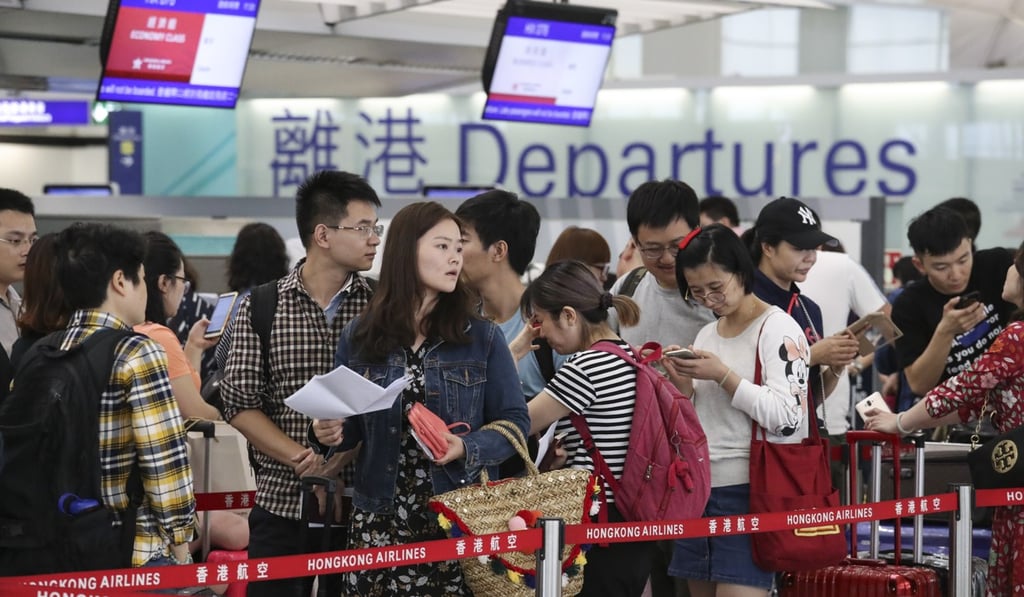
“Passenger numbers can increase in a geometric ratio in the coming years ... fuelled by the strong demand of Chinese spenders for travel and the emerging Chinese consumer economy,” Law said, while adding that Hong Kong would see “fiercer” competition from mainland airports that were aggressively launching new long-haul flights.