Ghost cities haunt stability dream in China’s far west
Several ambitious projects around Kashgar have stagnated despite government plans to put Xinjiang’s economy on a par with the rest of the nation

The future of economic development in China’s far western Xinjiang region lies behind the shattered glass door of a welcome centre on the outskirts of the ancient Silk Road city of Kashgar.
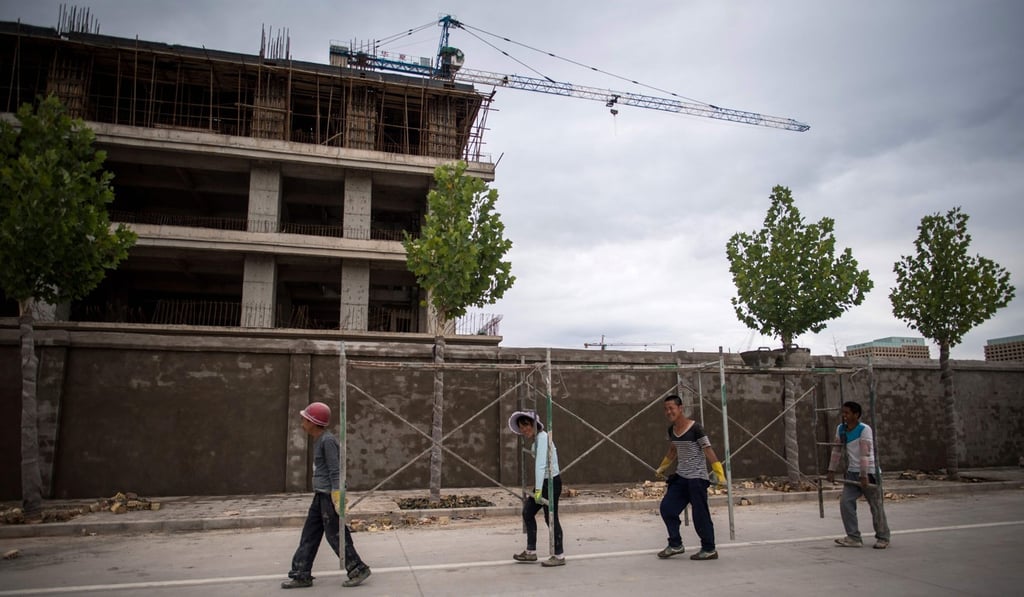
Inside, a dusty model depicts a modern urban development with wide, tree-lined boulevards and a pair of twin skyscrapers – but outside the project remains a ghost town reflecting Beijing’s struggle to bring prosperity to the restless region.
Dubbed “Shenzhen City” after the bustling southern port city that financed it, the more than 200,000 square metre development is part of a government project to stabilise Xinjiang with massive economic stimulus.
Beijing has paired promises of wealth with strict controls on personal and religious freedoms in an effort to quell ethnic strife between the country’s Han majority and the region’s mostly Muslim Uygur minority.
But outside the welcome centre, where a broken LED sign flashes out an investment hotline number like an SOS, the plan for a vibrant oasis on the western edge of the Taklamakan Desert stands like a mirage.