Advertisement

Why China’s aerospace experts have become Xi Jinping’s new political elite

Four former aerospace engineers are now provincial governors

Reading Time:5 minutes
Why you can trust SCMP
China’s Shenzhou IX spacecraft is launched from the Jiuquan Satellite Launch Centre in Inner Mongolia in June 2012. Photo: AP

China’s Communist Party has decided that veterans of the country’s space programme have the right stuff for promotion to important political roles in key provinces.

Giving new meaning to the term high-flier, four aerospace engineers have become provincial governors in the past four years.
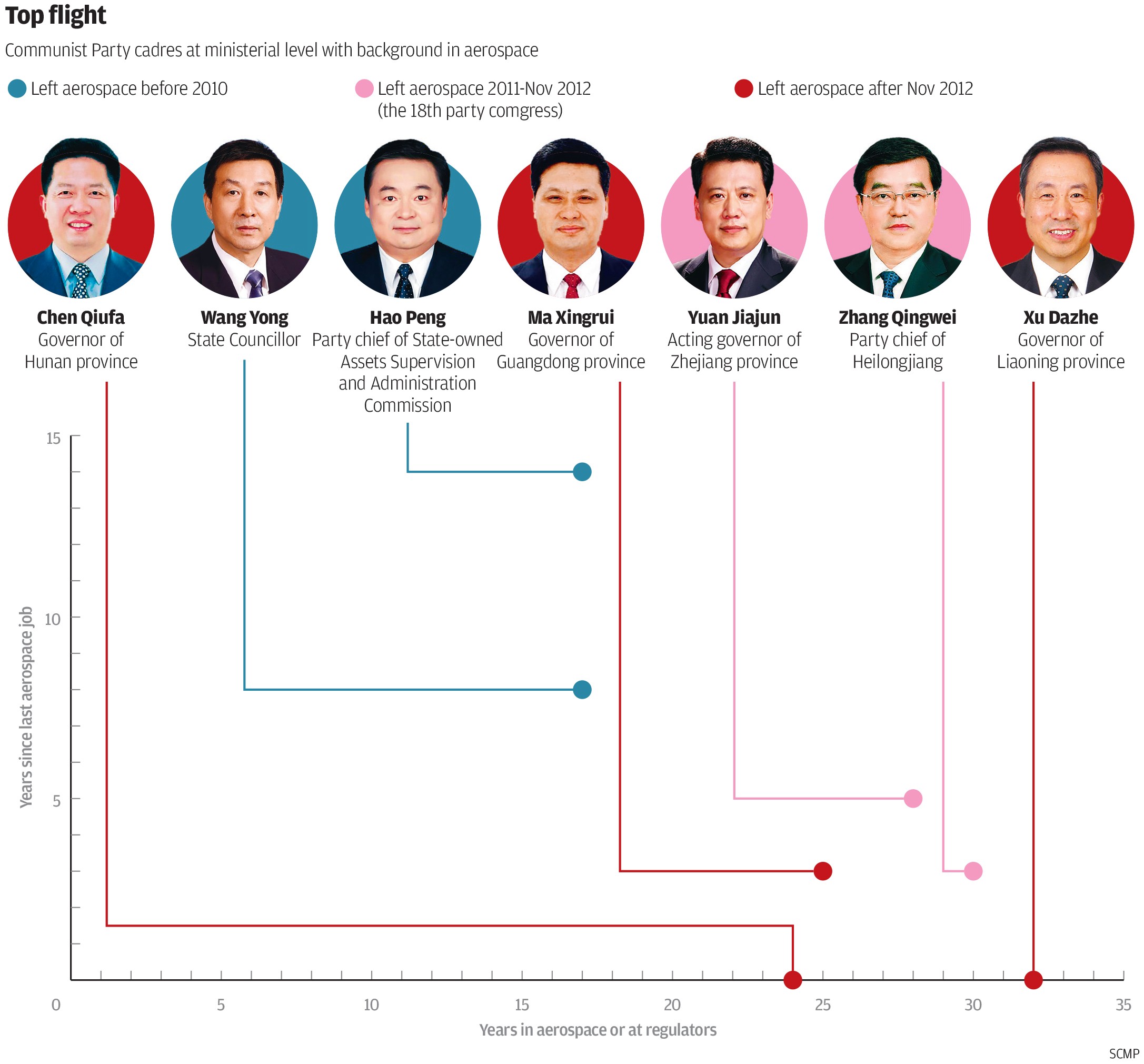
Ma Xingrui, a former general manager of the China Aerospace Science and Technology Corporation (CASTC), became governor of Guangdong, the province with the biggest economy, last year. Xu Dazhe, a fellow with the International Academy of Astronautics, has governed the central province of Hunan from around the same time. Two years ago, Chen Qiufa, who oversaw the country’s space programme until 2013, was made governor of Liaoning and tasked with reviving the rust-belt province. Last week, former China Academy of Space Technology president Yuan Jiajun, who was also chief commander of China’s Shenzhou manned space programme, was appointed acting governor of Zhejiang, a hub of private business and the power base of President Xi Jinping.
Where the space industry and politics meet.
Advertisement

Until five years ago the quartet worked at either CASTC, a state-owned group that has spearheaded the technological development behind China’s ambitious space exploration programme – producing the country’s rockets, satellites and missiles – or the China National Space Administration, which is in charge of that programme.
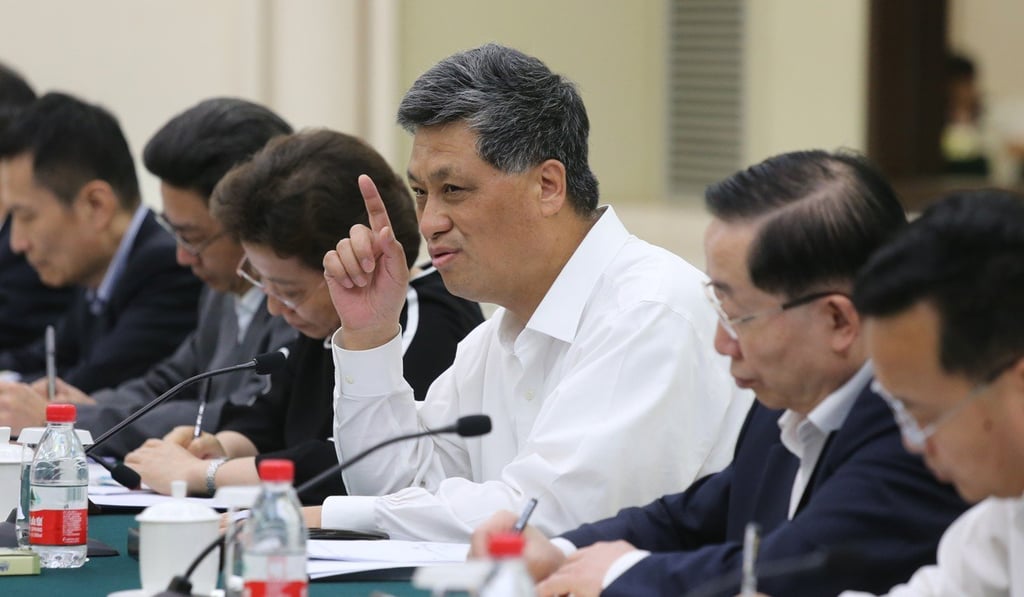
Guangdong governor Ma Xingrui (centre) at a meeting with provincial officials last month. Photo: Dickson Lee
Advertisement

In the past, provincial governors were predominantly selected from the ranks of those working in local government or the heads of prominent ministries. The political rise of a group with similar backgrounds has usually been linked to the power of a major faction or influential figure, such as party general secretary Xi.

People who have worked with the former aerospace engineers say the technocrats developed a cocktail of traits that appeared tailor-made to appeal to the current leadership. They did not cook the books, were willing to make necessary but unpopular decisions and were largely untainted by factional allegiances.

Advertisement
Select Voice
Choose your listening speed
Get through articles 2x faster
1.25x
250 WPM
Slow
Average
Fast
1.25x